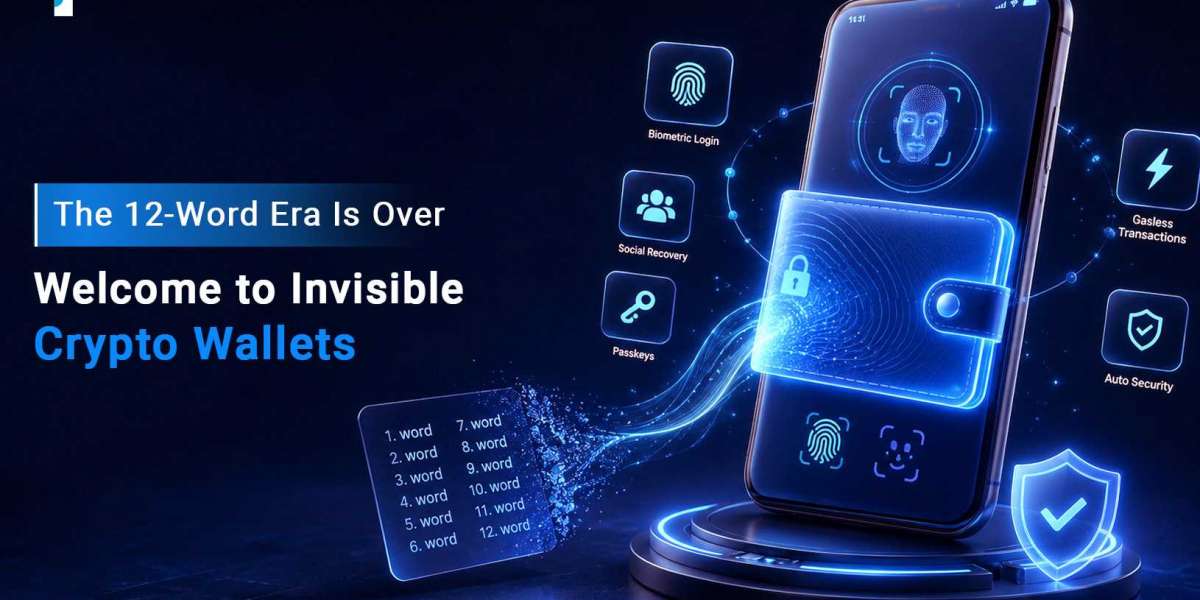

There's a moment most crypto users remember — writing down a string of 12 or 24 random words on a scrap of paper and being told, "Guard this with your life." For years, that seed phrase was the gateway to financial sovereignty. Lose it, and you lose everything. No recovery. No support desk. No second chances.
In 2026, that model is being quietly retired. And the shift is happening faster than most of the industry expected.
The UX Wall That Was Quietly Killing Web3 Adoption
Despite billions in venture capital and a decade of innovation, crypto still struggles with a fundamental onboarding problem. Research from Web3 analytics firms has consistently shown that over 70% of first-time wallet users abandon the setup process — and seed phrase management is the single biggest friction point.
It's not a fringe issue. It's an existential one.
Self-custodial crypto wallets built on seed phrase architecture were designed for a technically fluent minority. But Web3's next billion users aren't developers or early adopters — they're everyday consumers, SMEs, and enterprises who expect the same seamlessness they get from a banking app or a Google account.
The industry finally acknowledged what many had suspected for years: the barrier to entry is the key itself.
What Are "Invisible" Crypto Wallets, Exactly?
The term "invisible wallet" refers to a new generation of self-custodial wallet architecture where the underlying cryptographic key management is abstracted away entirely from the end user. The wallet exists — keys are generated, signing happens, and transactions are authorized — but the user never sees, writes down, or manages a seed phrase.
Several technologies are converging to make this possible:
Multi-Party Computation (MPC): Instead of a single private key stored in one place, MPC splits key signing across multiple parties or devices. No single point holds the full key — and no seed phrase is ever generated. Even if one node is compromised, the wallet remains secure.
Passkey-Based Authentication: Leveraging the FIDO2/WebAuthn standard now baked into iPhones, Android devices, and major browsers, wallets can bind to a user's biometric — a fingerprint or Face ID — instead of a mnemonic phrase. The private key never leaves the device's secure enclave.
Account Abstraction (ERC-4337 and Beyond): Smart contract wallets decouple the signing key from the account itself. This enables social recovery, multi-sig by default, spending limits, and session keys — features that make wallets behave more like bank accounts without sacrificing self-custody.
Embedded Wallets: Increasingly popular in gaming, DeFi, and fintech apps, embedded wallets are provisioned silently inside an application using email, OAuth, or social login. Users interact with onchain assets without ever knowing a wallet was created.
The Market Is Already Voting With Its Feet
The data tells a clear story. Adoption of MPC-based wallets among institutional players surpassed traditional hardware wallet deployments for the first time in late 2025. Consumer-facing apps integrating invisible wallet infrastructure — from NFT platforms to crypto-native neobanks — have reported 3–5x improvements in onboarding completion rates versus seed-phrase alternatives.
Click on the link for more detail:-