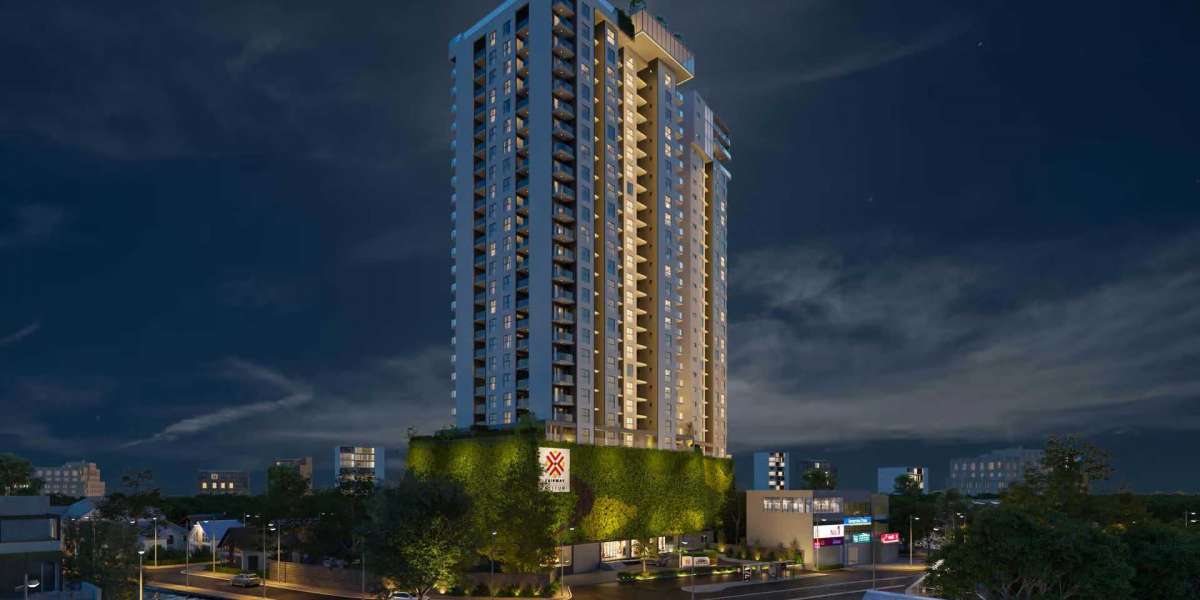

A few decades ago, owning a house with a garden and a driveway was the universal marker of success. Ask most people what they dreamed of and the answer was some version of the same picture: a standalone home, a patch of land, a fence marking out what was theirs. That dream has not disappeared, but it has quietly lost its monopoly on what people actually want. Walk through any growing city today and you will see cranes, glass towers, and a steady stream of young professionals, retirees, and families choosing to live closer to the pulse of the city rather than further from it. If you have been browsing listings for apartments for sale in Colombo lately, you have probably noticed this shift firsthand — the inventory is growing because the demand is growing, and the reasons behind that demand are worth understanding.
A Change in What "Home" Means
The idea of home has always been shaped by circumstance. For our parents and grandparents, land was affordable, commutes were shorter, and cities hadn't yet swelled to the size they are now. Today, that equation has flipped. Land within a reasonable distance of jobs, schools, and hospitals has become scarce and expensive, while time itself has become the resource people guard most jealously. An apartment fifteen minutes from the office is not just convenient anymore — it is a lifestyle decision that gives people back hours of their day, hours they'd otherwise lose sitting in traffic.
This is not unique to any one country. From Mumbai to Manila, from Nairobi to Colombo, the same pattern repeats itself: as cities grow, vertical living stops being a compromise and starts being a preference. People are not settling for apartments because houses are out of reach. Many are choosing apartments because they genuinely fit how modern life works.
The Practical Pull of City Living
There is a simple economic logic behind this shift. Building upward is more efficient than building outward, which means developers can offer more amenities, better security, and prime locations at a price point that a standalone house in the same area simply can't match. A family that might spend years commuting from the suburbs to afford a house with a garden can instead settle into a well-located apartment and spend that saved time actually living — with their children, at work, or simply resting.
Then there is maintenance. Owning a house means owning every problem that comes with it: the roof that needs fixing, the garden that needs tending, the security system that needs upgrading. Apartment living, particularly in well-managed developments, hands much of that responsibility over to a professional management team. For working couples, busy parents, and anyone who values their weekends, that is not a small thing. It is often the deciding factor.
Amenities That Actually Get Used
Modern apartment complexes have also become far more thoughtful about what residents actually want day to day. Gyms, swimming pools, co-working lounges, children's play areas, and rooftop gardens are no longer luxuries reserved for the wealthy; they are becoming standard expectations. And because these amenities are shared across hundreds of residents rather than maintained by a single household, they are often better maintained and more varied than what any individual family could build on their own property.
This is especially visible when you look at luxury apartments in Sri Lanka, where developers have leaned into this idea fully — designing buildings around wellness, community, and convenience rather than just square footage. A resident does not need a private pool when the building has one, does not need a home gym when there is a fully equipped one downstairs, and does not need to drive across town for a coffee with a view when the rooftop lounge offers exactly that.
Location Has Become the New Luxury
Perhaps the most significant shift in how people think about property is this: location has quietly overtaken size as the thing people are willing to pay for. A smaller apartment in a well-connected, vibrant neighbourhood is often more desirable than a larger house tucked away in a quiet but distant suburb. This is particularly true for young professionals who want to be near their workplaces, restaurants, and social circles, but it is equally true for older buyers who want to downsize without giving up access to good healthcare and city conveniences.
Certain neighbourhoods have come to embody this appeal more than others. Take apartments in Colombo 5, for instance — an area that blends residential calm with genuine accessibility to schools, hospitals, and business districts. It is the kind of location that quietly does a lot of the work for you: you don't need to plan your life around long drives because everything you need is already close by. That balance of tranquillity and connectivity is exactly what today's buyers are chasing, whether they are raising a family or living solo.
Rethinking Property as an Investment
There is also a financial story here that shouldn't be overlooked. Urban apartments, particularly in growing cities, tend to appreciate steadily because the demand driving their popularity is not a passing trend — it is structural. Cities keep growing, land within them keeps shrinking, and well-located apartments keep becoming scarcer relative to the number of people who want to live in them. For anyone thinking seriously about where to put their money, that scarcity is exactly what makes a property valuable over time.
This is why many financial advisors now point to urban apartments as the best property investment for people looking to balance steady appreciation with rental income potential. Unlike a house on the city outskirts, which depends heavily on future infrastructure development to gain value, a well-placed apartment in an established urban center already sits on land that is in demand today. That immediacy matters, especially for buyers who want their investment working for them without waiting a decade for the surrounding area to catch up.
A Shift That is Here to Stay
None of this means houses are disappearing or that everyone will eventually live in apartments. Plenty of people still want land, still want a garden, still want the particular kind of privacy that only a standalone home offers. But the balance has shifted, and it is shifted for reasons that make sense: time is scarcer, cities are denser, and convenience has become as valuable as space.
What is happening in cities around the world is not a fad driven by marketing or trends. It is a practical response to how people actually want to live now — closer to work, closer to community, and closer to the things that make daily life easier rather than harder. Apartments have simply caught up to that reality, offering a way of living that fits the pace and shape of modern cities. And as more people discover just how much sense that makes, it is easy to see why the skyline keeps growing, one building at a time.