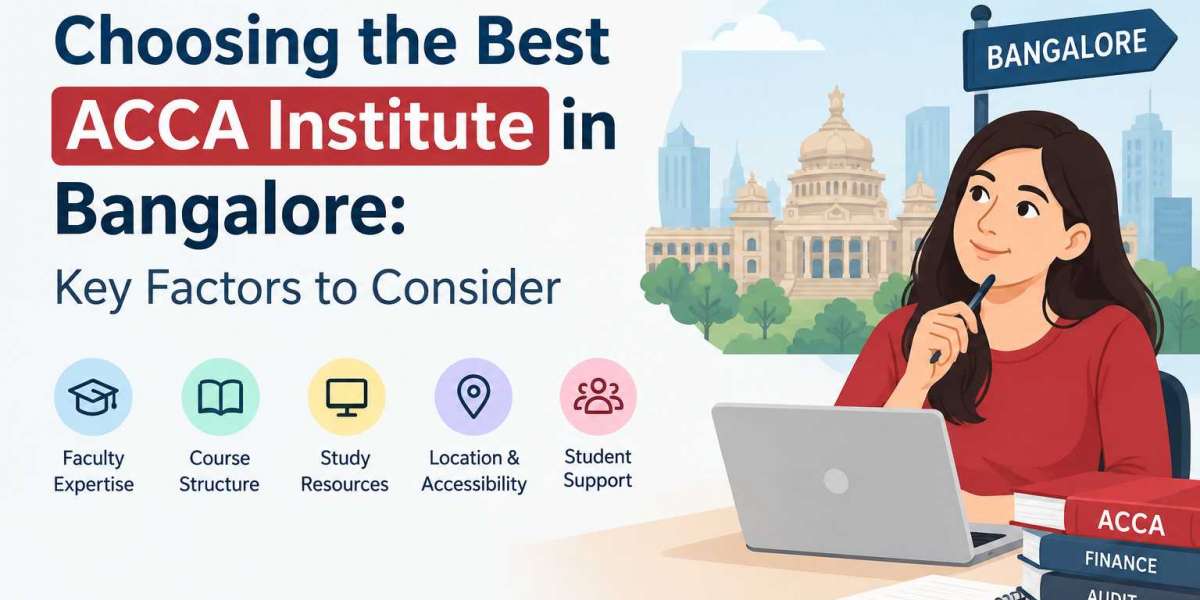

Choosing the right ACCA institute can make a big difference in how you approach your professional exam preparation. With several coaching providers available in Bangalore, students often find it difficult to decide which one actually matches their learning needs.
A course may look attractive because of its fees, location, faculty, or online options, but these are only a few things to consider. The quality of teaching, study material, practice support, doubt-solving process, and flexibility can have a much bigger impact on your preparation.
This guide explains the key factors students should consider before choosing an ACCA institute in Bangalore.
Understand the ACCA Qualification First
Before comparing institutes, it helps to understand what you are preparing for.
The ACCA Qualification currently includes three exam levels: Applied Knowledge, Applied Skills, and Strategic Professional. Students also need to complete the Ethics and Professional Skills module and meet the Practical Experience Requirement to become ACCA members.
The Applied Knowledge level covers Business and Technology, Financial Accounting, and Management Accounting. Applied Skills includes subjects such as Corporate and Business Law, Taxation, Financial Reporting, Performance Management, Financial Management, and Audit and Assurance.
At the Strategic Professional level, students complete Strategic Business Leader and Strategic Business Reporting, along with two options from areas such as Advanced Financial Management, Advanced Performance Management, Advanced Taxation, and Advanced Audit and Assurance.
Since the qualification covers several subjects and levels, your institute should provide a clear structure for moving from one stage to the next.
1. Check the Faculty and Teaching Style
Faculty quality should be one of the first things you evaluate.
ACCA subjects include accounting, taxation, auditing, financial reporting, and other technical areas. A good teacher should not simply explain textbook definitions. They should be able to break difficult topics into smaller concepts and show students how to approach exam questions.
Before enrolling, try to find out:
- Who will teach the subjects?
- What is their teaching experience?
- Do they explain concepts with practical examples?
- Are students able to ask questions during classes?
- Are revision sessions provided?
- Is the teaching style suitable for your learning needs?
If possible, attend a demo class before making a decision. Even a short demo can help you understand whether the instructor's pace and explanation style work for you.
2. Look at the Course Structure
A well-planned course should have a clear structure instead of simply providing a collection of lectures.
Ask how the institute plans to cover the syllabus and when students are expected to complete each subject.
The course should ideally include separate stages for:
Concept learning: Understanding the syllabus and fundamental ideas.
Question practice: Applying concepts to different types of questions.
Revision: Revisiting topics that have already been covered.
Mock exams: Practising under timed conditions before the actual examination.
This structure can help prevent students from reaching the final weeks with large portions of the syllabus still incomplete.
3. Check Whether the Study Material Is Updated
ACCA students need learning material that matches the syllabus and examination requirements applicable to their exam session.
A good institute should clearly explain what study resources are included in the course.
These may include:
- Subject-wise notes
- Lecture recordings
- Practice questions
- Revision material
- Mock tests
- Question banks
- Exam-focused resources
It is also worth checking how the institute handles syllabus changes. ACCA regularly provides information about qualification and exam updates, so students should avoid relying on outdated material.
4. Consider Live and Recorded Classes
Different students have different learning schedules.
Some prefer attending live classes because they can interact with the faculty and ask questions immediately. Others may need recorded sessions because of college, work, travel, or personal commitments.
A combination of both can offer greater flexibility.
Before enrolling, check:
- Whether live classes are available
- Whether sessions are recorded
- How long recordings remain accessible
- Whether recordings can be watched more than once
- Whether classes can be accessed on different devices
This is particularly useful for working professionals who may not always be available at a fixed class time.
5. Check the Practice and Mock Test System
ACCA preparation should not be limited to watching lectures.
You need regular practice to understand how well you can apply what you have learned.
Ask whether the institute provides topic-wise questions after completing each chapter and whether full-length mock exams are included.
Mock tests can help you identify:
- Topics that require more revision
- Questions that take too much time
- Repeated calculation mistakes
- Areas where concepts are unclear
- Problems with exam time management
After each test, spend time reviewing incorrect answers. The purpose of a mock test is not just to receive a score but to understand where your preparation needs improvement.
6. Evaluate Doubt-Solving Support
Even after attending a good class, students may have questions while studying independently.
You might understand a concept during a lecture but face difficulty when solving a new question later.
This is why doubt-solving support matters.
Ask the institute how students can contact faculty when they have questions. It could be through live doubt sessions, discussion groups, email, messaging, or one-to-one support.
Also check whether doubts are answered within a reasonable timeframe.
A clear support system can make online or hybrid learning feel much more interactive.
7. Consider Flexibility for Your Schedule
Your ideal institute depends partly on your daily routine.
A college student may be comfortable with regular evening classes, while a working professional may need weekend or recorded sessions.
Before choosing a program, think about your actual schedule rather than the schedule you wish you had.
For example, if you regularly work late, a course with only fixed evening classes may become difficult to follow.
Flexible access can make it easier to stay consistent with preparation.
8. Compare Fees and What You Get for Them
Course fees are naturally an important consideration, but they should not be the only deciding factor.
Instead of comparing prices alone, compare what each program includes.
Check whether the fee covers:
- Classes
- Study material
- Recorded lectures
- Practice questions
- Mock exams
- Revision classes
- Doubt-solving
- Course access
- Additional learning resources
Two institutes may have different fees because their course structures and support systems are different.
Looking at the complete package gives you a better understanding of what you are actually paying for.
9. Look at Student Reviews Carefully
Student reviews can give you useful information about an institute's learning experience.
However, do not look only at the overall rating. Read individual reviews and look for repeated comments about specific areas.
For example, students may mention:
- Faculty support
- Teaching quality
- Study material
- Class schedules
- Doubt-solving
- Mock tests
- Online learning experience
Try to identify patterns rather than relying on one positive or negative review.
You can also ask current or former students about their experience if you have the opportunity.
10. Check the Institute's Learning Support
ACCA preparation is a long-term process. Therefore, academic support should continue beyond individual lectures.
A useful learning environment may include progress tracking, revision planning, faculty interaction, and guidance on how to approach different subjects.
For students who are new to professional qualifications, this type of support can be particularly useful because they may not know how to divide their preparation time or prioritise difficult subjects.
Why Online Learning Can Be Useful for ACCA Students
Online learning has become a practical option for students who want flexibility.
Students can attend classes from home, revise recorded sessions, and access digital resources without spending time travelling to an institute.
For example, students who are also preparing for another professional qualification may use cfa online classes alongside their other studies, depending on their schedule and academic goals.
However, online learning requires self-discipline. A flexible schedule is useful only when students actually follow it.
Create fixed study hours, maintain weekly targets, and avoid allowing recorded lectures to pile up.
About NorthStar Academy
NorthStar Academy is a professional training institute that provides online professional training for globally recognised finance and accounting qualifications.
Its learning approach is designed around professional exam preparation, with courses covering qualifications such as ACCA, CFA, CMA US, CPA US, CIA, and EA.
Students considering an institute should look at factors such as faculty, course structure, study resources, flexibility, practice support, and doubt-solving before making an enrollment decision. These factors can help students determine whether Northstar Academy or another training provider fits their individual preparation requirements.
Common Mistakes to Avoid When Choosing an ACCA Institute
Choosing Only Based on Fees
A low course fee does not necessarily mean the program will meet your learning needs. Always check what is included.
Ignoring the Faculty
The quality of teaching can directly affect how easily you understand technical subjects.
Not Checking Course Access
If you choose an online program, understand how long you can access recordings and study material.
Focusing Only on Reviews
Reviews can be useful, but they should be considered along with course structure, faculty, support, and learning resources.
Leaving Practice Until the End
Do not wait until the final weeks to solve questions. Practice should happen throughout your preparation.
A Simple Checklist Before Enrolling
Before making your final decision, ask yourself:
- Does the teaching style suit me?
- Are the faculty experienced?
- Is the course based on the applicable ACCA syllabus?
- Are practice questions included?
- Are mock exams provided?
- Can I ask doubts easily?
- Are recorded classes available?
- Does the schedule fit my routine?
- What exactly is included in the course fee?
- How long will I have access to the learning material?
If the answers match your requirements, the institute may be worth considering.
The goal is not simply to find the best acca institute in bangalore based on a single feature. Instead, look for a learning environment that matches your study habits, academic level, schedule, and preparation needs.
Conclusion
Choosing an ACCA institute in Bangalore requires more than comparing course fees or looking at promotional claims. Faculty quality, course structure, updated study material, practice opportunities, mock tests, doubt-solving, flexibility, and student support all deserve attention.
Before enrolling, understand your own learning needs first. Decide whether you prefer live classes, recorded sessions, or a combination of both. Then compare institutes based on the complete learning experience they provide.
ACCA is a multi-stage professional qualification, so consistent preparation matters throughout the journey. A suitable institute can provide structure and academic support, but your regular study, practice, and revision will remain an important part of your progress.
FAQs
1. What should I look for in an ACCA institute in Bangalore?
Look at faculty experience, course structure, updated study material, practice questions, mock tests, doubt-solving support, flexibility, and course access.
2. Is online ACCA learning useful?
Yes. Online learning can provide flexible access to classes, recordings, study material, and practice resources. It can be particularly useful for working professionals and students with busy schedules.
3. How many levels are there in the ACCA Qualification?
The current ACCA Qualification has three exam levels: Applied Knowledge, Applied Skills, and Strategic Professional. Students also need to complete the Ethics and Professional Skills module and Practical Experience Requirement.
4. How much practical experience is required for ACCA membership?
ACCA states that students need a minimum of 36 months of relevant practical experience along with the required performance objectives to qualify for membership.
5. Should I choose an ACCA institute based only on reviews?
No. Reviews can provide useful insights, but you should also compare faculty, course structure, study material, practice support, flexibility, and fees before enrolling.
6. Can I prepare for ACCA while working?
Yes. ACCA provides flexible study options, and online learning can make it easier to balance professional responsibilities with exam preparation.