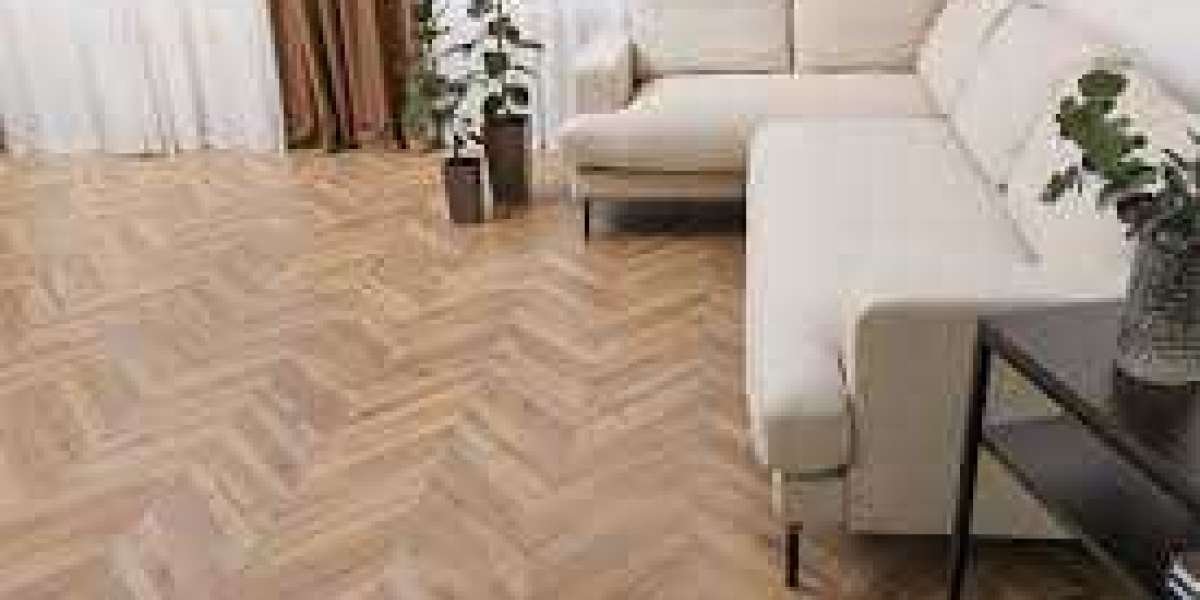

Introduction
If you're researching flooring options for your house, you've probably come across the word "PVC" or "poly vinyl chloride". It is, after all, one of the most popular modern home flooring solutions in Dubai. The first thing you need know about PVC is that it is a synthetic plastic polymer that is well-known and used for its durability, which is why it is commonly used in flooring applications. Vinyl floor tiles, in particular, are widely utilized in high-traffic areas due to their ability to endure heavy pressure. PVC flooring comes in a variety of forms and styles.Some are preferable for colder regions due to their insulating capabilities, while others are best for hot and humid environments due to their resilience to moisture and dramatic temperature swings.Below is a guide to help you install vinyl flooring efficiently and decide how to go about it.
PVC flooring is widely available in Dubai, and if you want to install it in your home, you've come to the perfect place. From the supplies required to the finishing touches, this guide to installing vinyl flooring will assist you, especially if you are doing it on your own.
Laying PVC Flooring in Dubai - An Easy Guide
You can easily install PVC flooring in your home yourself, but it does require a certain level of precision to get it right. Below is a step-by-step tutorial to installing PVC flooring correctly.
Things You Need for Laying Vinyl Floors
First things first. Purchase the materials for laying PVC tiles flooring. You'll need to purchase a PVC coating roll and special vinyl glue. A pencil, ruler, tape, paper cutter, toothed rack, and a knife rub or rolling roller are also required.
1) Place the PVC floor on a clean surface.
The surface that needs to be covered must be clean. Unroll your PVC covering so that it completely covers the ground and a small portion of the walls (approximately 5 cm). The remaining vinyl tiles can be applied to the walls to complete the room's appearance.
2) STICK YOUR PVC.
Clear the area that needs to be covered with new flooring. It's best to begin with one part at a time. Using a trowel, apply the special adhesive to the floor in circular movements. Allow the product to dry for 15-60 minutes (or as specified on the label). After the time has passed, begin placing the PVC tiles, planks, or sheet, whichever you are using. To avoid bubbles, flatten the freshly glued covering or rub it with a knife from center to end. Repeat these processes for the remaining areas of the floor.
3) FINISHING
After you've finished stacking your floors, cut the tiles or sheets for the walls to add a final touch. Repeat the cleaning and coating technique for the walls, and create a nice border with your flooring material. Use your spatula to firmly press each of these parts.
You must now allow the flooring to dry for several hours (usually 48 hours) so that the adhesive can cure. Don't reorganize your space until you're certain your flooring is adequately secured to the ground.
If you're changing a carpeted floor to vinyl, check out this guide.
Now that we've provided you a step-by-step guide to installing PVC flooring, let's address any worries or misconceptions you may have about this flooring option.
WHY CHOOSE PVC FLOORING?
Poly vinyl chloride flooring is well-known for its resemblance to wood, but some of its designs also seem like granite. It is also water and stain resistant, making it appropriate for use in any household or commercial area. It is also easy to clean and adapts to all weather conditions. It is essentially plastic flooring, which serves to insulate against both hot and cold weather extremes.
Wood flooring has been increasingly popular in recent years, but it is difficult to maintain and expensive. It also takes frequent upkeep, and if you ever want to sell your home, wooden flooring is too specific a style for most buyers.
Marble, on the other hand, is a popular flooring option. However, expensive marble flooring will cost far more than PVC flooring. If you want to redo your house flooring on a budget, PVC is the ideal option.
WHICH PVC FLOORING TO CHOOSE?
PVC flooring is widely classed into two types: homogeneous and heterogeneous, often known as PVC plank flooring.
Homogeneous PVC floors are very inexpensive and ideal for high-traffic and industrial environments such as hospitals, schools, libraries, supermarkets, and warehouses. However, it is not an attractive alternative because it is mostly one color with no patterning. Surface polyurethane coating keeps filth from clinging to the surface and makes cleaning the floor easier. However, this type of floor might be slippery and does not provide the elegant impression you are hoping for. As a result, most individuals choose a variety of PVC flooring options.
Heterogeneous PVC flooring is a multi-layered, thicker flooring available in a wide range of colors, designs, and patterns. People recommend adopting the plank approach due to its thickness and to assure the flooring's lifespan.
PVC plank flooring is installed in the same way as described above, but it poses concerns about subflooring and moisture treatment prior to completion. Unlike laminate flooring, most vinyl floors are meant to be installed directly on top of the subfloor.
You can utilize your old flooring as a subfloor, but there are a few things to consider. For example, it's critical that the template you're working on be in excellent enough condition to serve as a subfloor, which means it should not be destroyed. Ideally, it should be smooth and dust-free. However, if you're working with concrete, you must utilize some form of padding or underlayment to make the floor easier to walk on. If you intend to put PVC flooring over wood, tile, or linoleum, you can add a sub-flooring of the same material to prevent moisture and provide additional cushion. However, levelling and cleaning your old floor will suffice.
The next step is to select the correct type of vinyl flooring. There are numerous patterns and designs to pick from. This will be determined purely by the overall motif of your home or workplace, as well as the exact area where you intend to put vinyl flooring. After you've decided on the pattern and color of your flooring, you should consider its thickness. This is a critical stage.
What is the appropriate thickness of vinyl PVC flooring for each room?
Searching for PVC flooring in Dubai. Rolls of varied thickness are readily available in local markets. That being said, you must be very specific regarding the thickness of flooring in each room of your home, as this influences the floor's longevity. Many people are concerned about this because each level of thickness corresponds to a specific purpose. Typically, each form can be classified based on its application in various rooms of the house or business space.
Occasional passage rooms (offices, bedrooms) have a thickness of 0.12 to 0.15 millimeter.
Frequently used rooms (living room, dining room, staircase, etc.) have a thickness of 0.15 to 0.25 millimeters.
High traffic areas (kitchens, children's rooms, hotel and business lobbies, public waiting rooms in hospitals, etc.) have a thickness of 0.25 to 0.30 millimeters.
We hope our guide to different types of PVC flooring in Dubai will help you select the best floor for your home.








