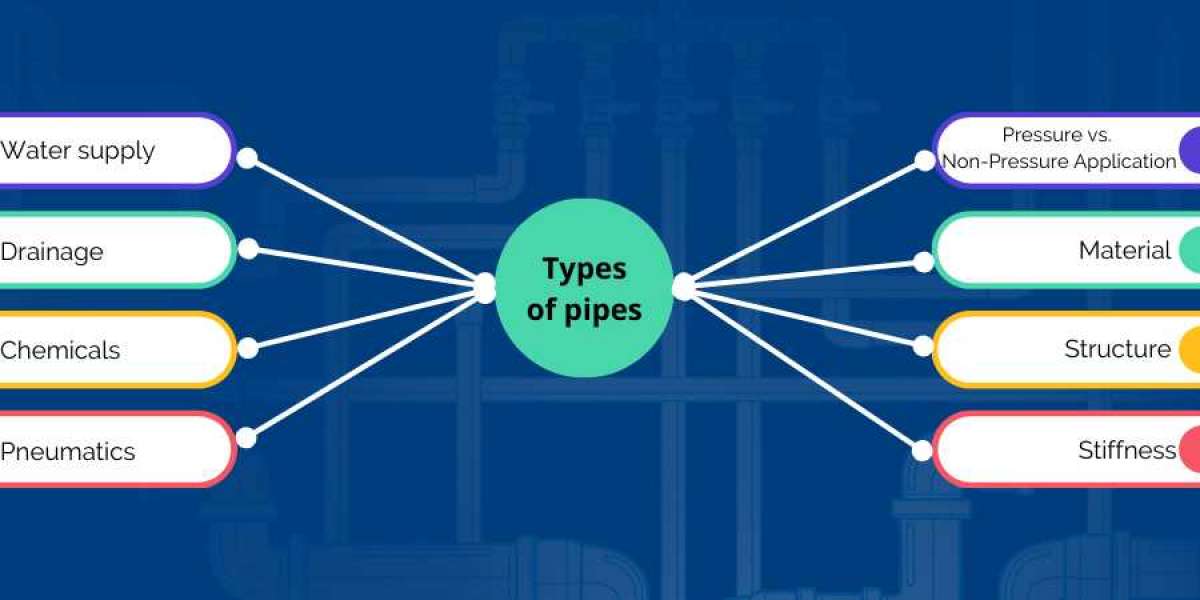

If you are a contractor, builder, plumber, or homeowner planning a project, understanding the types of pipes and their uses can help you make smarter and more cost-effective decisions. In this guide, we will explore the major types of pipes used in water supply, drainage, chemicals, pneumatics, and pressure vs. non-pressure systems.
1) Pipes for Water Supply Systems
Water supply pipes are designed to safely transport potable water from the source to residential, commercial, and industrial spaces. These pipes must be durable, non-toxic, corrosion-resistant, and capable of handling pressure.
Common Water Supply Pipes
PVC (Polyvinyl Chloride) Pipes
They are lightweight, affordable, corrosion-resistant, and easy to install. They do not react with water and maintain water quality.
CPVC (Chlorinated Polyvinyl Chloride) Pipes
CPVC pipes are ideal for both hot and cold water. They can withstand higher temperatures and pressures compared to standard PVC. They are commonly used in homes, apartments, and hotels.
HDPE (High-Density Polyethylene) Pipes
HDPE pipes are flexible, leak-proof, and highly durable. They are often used in underground water supply and municipal distribution systems.
2) Pipes for Drainage Systems
Drainage pipes carry wastewater, sewage, and stormwater away from buildings and infrastructure. These pipes must resist corrosion, chemicals, and blockages.
Common Drainage Pipes
uPVC Drainage Pipes
uPVC pipes are one of the best choices for drainage. They are smooth inside, which reduces clogging. They are also resistant to chemicals and corrosion.
Corrugated Pipes
These pipes have a ribbed structure that adds strength. They are widely used for underground drainage and stormwater management.
Cast Iron Pipes
Although traditional, cast iron pipes are still used in some drainage systems due to their strength and sound-dampening properties.
3) Pipes for Chemical Applications
Chemical industries require pipes that can safely transport acids, alkalis, and other reactive fluids. These pipes must be highly resistant to chemical reactions and corrosion.
Common Chemical Pipes
CPVC Chemical Pipes
CPVC pipes are resistant to a wide range of chemicals and high temperatures, making them suitable for industrial use.
PP (Polypropylene) Pipes
PP pipes are known for excellent chemical resistance and are often used in laboratories and chemical plants.
PVDF Pipes
PVDF pipes are premium pipes used where high chemical purity and resistance are required.
4) Pipes for Pneumatic Systems
Pneumatic systems use compressed air to operate machinery and automation systems. Pipes in these systems must handle air pressure and prevent leakage.
Common Pneumatic Pipes
Nylon Pipes
Flexible and strong, nylon pipes are commonly used in pneumatic lines.
PU (Polyurethane) Tubes
PU tubes are highly flexible and kink-resistant, ideal for tight routing in machinery.
5) Pressure vs. Non-Pressure Pipe Applications
Understanding pressure ratings is crucial when selecting pipes.
Pressure Pipes
These pipes carry fluids under pressure, such as water supply lines, irrigation systems, and industrial pipelines. They must withstand internal stress without bursting.
Examples:
CPVC pressure pipes
HDPE pressure pipes
PVC pressure pipes
Non-Pressure Pipes
These pipes are used where gravity flow is enough, such as drainage and sewer lines. They do not need to handle high internal pressure.
Examples:
uPVC drainage pipes
Sewer pipes
Stormwater pipes
Choosing the wrong type can lead to leaks, failures, and costly repairs.
6) Pipe Materials and Their Importance
Pipe performance largely depends on material selection.
Plastic Pipes
Lightweight
Corrosion-resistant
Cost-effective
Easy installation
Examples: PVC, CPVC, HDPE
Metal Pipes
Strong and durable
Suitable for high temperatures
Long lifespan
Examples: Steel, copper, cast iron
Composite Pipes
These combine multiple materials to enhance strength and durability.
7) Pipe Structure Types
Pipe structure affects strength and application.
Solid Wall Pipes
Uniform wall thickness. Used in pressure systems.
Ribbed or Corrugated Pipes
External ribs provide strength while reducing weight. Ideal for drainage.
Multi-Layer Pipes
Combine layers for strength, insulation, and chemical resistance.
8) Pipe Stiffness and Why It Matters
Pipe stiffness refers to a pipe’s ability to resist deformation under load. It is especially important for underground installations.
High stiffness pipes:
Maintain shape under soil load
Last longer underground
Reduce risk of collapse
Low stiffness pipes:
More flexible
Suitable for certain applications but require careful installation
Selecting the right stiffness ensures durability and performance.
How to Choose the Right Pipe?
Consider these factors:
Application type
Pressure requirements
Temperature range
Chemical exposure
Installation environment
Budget
Consulting experts and choosing quality manufacturers ensures long-term reliability.
Conclusion
Pipes may look simple, but choosing the right type is critical for safety, efficiency, and longevity. Whether it’s water supply, drainage, chemicals, or pneumatics, each application demands specific pipe properties. Understanding pressure ratings, materials, structure, and stiffness helps in making the best choice.
Investing in high-quality piping systems today prevents costly repairs tomorrow.
Call to Action
Looking for reliable, high-quality pipes for your next project?
Visit ajaypipes.com to explore a wide range of durable and certified piping solutions for residential, commercial, and industrial needs. Choose quality. Choose performance. Choose long-term reliability.
FAQs
1) Which pipe is best for home water supply?
CPVC pipes are often the best choice because they handle both hot and cold water, resist corrosion, and last long.
2) What pipes are used for underground drainage?
uPVC and corrugated pipes are commonly used due to their strength, corrosion resistance, and smooth flow.
3) Are plastic pipes safe for drinking water?
Yes, certified PVC and CPVC pipes are safe for potable water and do not affect water quality.
4) What is the difference between pressure and non-pressure pipes?
Pressure pipes handle internal pressure from pumped fluids, while non-pressure pipes rely on gravity flow.
5) Why is pipe stiffness important?
Pipe stiffness prevents deformation and collapse, especially in underground installations.