

The term fitness has been equated for decades with six-pack abs, marathon pace, and bicep curls. However, in the complexity of 2026, which is the age of artificial intelligence, information overload, and a life expectancy never seen before. A new form of fitness has become the order of the day: Neuro-Fitness.
Furthermore, it is just like you would never go running a marathon without training your legs. You would never be able to navigate the cognitive conditions of the modern world without training your brain. Neuro-Fitness is not a nonconformist biohacking movement anymore; it has become a mainstream one, like cardiovascular health. It is a paradigm shift in focusing on the outcomes of mental decrease to actively designing cognitive within the parameters of resilience.
What is Neuro-Fitness?
Neuro-Fitness is a scientific process of increasing brain functioning by using exercises and technology, and lifestyle modifications. In contrast to the conventional mental stimulation (such as completing crossword puzzles), Neuro-Fitness is evidence-based, customized, and concentrated on concrete results such as neuroplasticity, being the capability of the brain to remodel itself and establish new neural relationships during the life cycle.
Neuro-Fitness (2026) has a very simple principle behind it, which is that what gets measured gets managed. It integrates the scientific discipline of sports preparation and neuroscience. Practitioners do not simply expect their brains to become sharper and sharper; they monitor such indicators as the gamma wave activity, variability of reaction time, and cognitive load capacity. To make sure that their brains are aging well and they perform at their best. In order to become truly fit at the level of cognition, a person needs to subject him/herself to a holistic training program.
The 2026 model has four pillars:
1. Cognitive Cross-Training
Cognitive athletes cross-train to create a healthy brain, just like the physical players cross-train as a means of injury prevention. This is alternating in various forms of mental loads:
- Attention Training: Digital training to overcome distraction. This may be common in the year 2026, which is associated with Virtual Reality (VR) spaces that exercise long-term attention in the presence of stimuli (noise) that resembles open-plan offices or social media feeds.
- Memory Architecture: Entering beyond mere memorizing to so-called memory palaces with the help of AR (Augmented Reality) glasses, which allow users to visualize and store large amounts of information with high efficiency.
- Executive Placement: Problem-solving, including rapid task-switching, impulse control, and tactical planning under time restraints, which is also gamified.
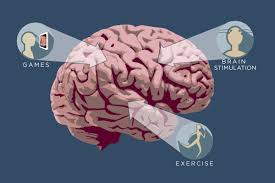
2. Neurofeedback and Brain-Computer Interfaces (BCIs).
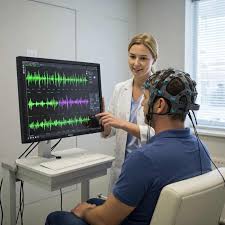
The biggest innovation in Neuro-Fitness in the past three years has been the use of non-invasive BCIs among consumers. Real-time feedback of electroencephalogram (EEG) is now accessible with wearable headbands and even earbuds.
Think about the dashboard on which you can see your state of brainwaves. When your brain is experiencing high levels of beta waves (stress) during focus timing, the system will produce a very minute audio signal, which helps your brain come back and go into a high-alpha compared to a low-gamma state. Gradually, such a conditioning becomes self-controlling in the brain. In 2026, there will be high-end fitness centers with neuro-porches or so-called Neuro-Pods, where members will train 20 minutes to neural efficiency as they do 20 minutes on the treadmill at a cardiac efficiency training facility.
https://www.justfitss.com/neuro-fitness-in-2026-the-workout-for-a-high-performance-brain/








justfitss 24 w
amzing