For those new to the world of flexible packaging, or even for seasoned professionals who have worked with BOPP film for years without ever stopping to consider how it actually works, there is value in stepping back to understand the fundamentals. What is this material that wraps everything from snack foods to shipping labels, and why has it become so ubiquitous across industries? HARDVOGUE's decades of experience in manufacturing BOPP film have yielded insights that go beyond the technical specifications, touching on the core properties that make this material so versatile and the manufacturing decisions that determine how it performs in the real world. For packaging professionals looking to deepen their understanding of the materials they work with every day, these insights offer a useful foundation.
What Makes BOPP Film Different
BOPP stands for biaxially oriented polypropylene, a description that captures the essence of what makes this film special. The term "biaxially oriented" refers to a manufacturing process where the polypropylene sheet is stretched in two directions—machine direction and transverse direction—simultaneously. This stretching aligns the polymer chains in ways that dramatically enhance the material's strength, clarity, and barrier properties compared to non-oriented films. HARDVOGUE's experts explain that this orientation process is where the magic happens. Without orientation, polypropylene film would be softer, weaker, and less stable. The orientation transforms it into the strong, crisp, versatile material that has become the standard for countless packaging applications. Understanding this fundamental distinction helps explain why BOPP outperforms other films in so many contexts.
The Role of Additives in Film Performance
Pure polypropylene, while a useful material, would not be sufficient for most packaging applications without the addition of carefully selected additives. HARDVOGUE's formulation expertise lies in knowing how to combine these additives to achieve the specific properties that different applications demand. Slip agents reduce the coefficient of friction, allowing film to move smoothly through packaging machinery. Anti-block particles prevent layers of film from sticking together on the roll. Processing aids ensure consistent extrusion and orientation. Stabilizers protect the film from degradation during manufacturing and throughout its useful life. Each additive serves a specific purpose, and the precise combination determines how the film will behave on a packaging line. For packaging professionals, understanding that these invisible components shape film performance helps explain why not all BOPP films are created equal.
The Importance of Gauge Uniformity
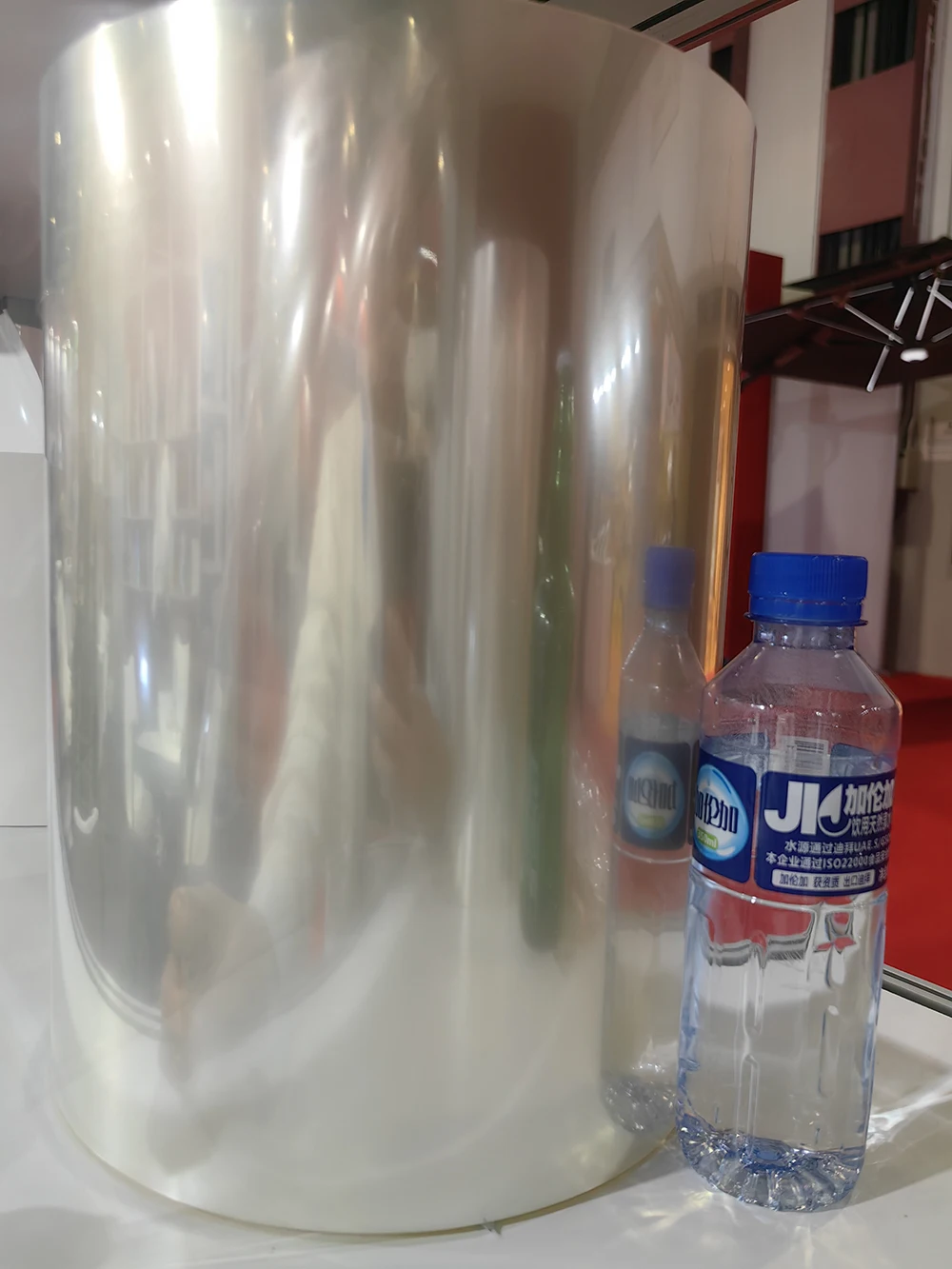
One of the most critical factors in BOPP film performance is something that is difficult to see but easy to measure: gauge uniformity. Variations in thickness across the width of the film can cause problems in converting, printing, and packaging. A thicker section may create tension variations that cause web wander. A thinner section may compromise barrier properties or seal strength. HARDVOGUE's manufacturing processes are designed to maintain gauge profiles within exceptionally tight tolerances, ensuring that every millimeter of film contributes to consistent performance. For production managers who have experienced the frustration of film that tracks poorly or seals inconsistently, the importance of gauge uniformity becomes immediately apparent.
Surface Energy and Printability
Before any ink touches a BOPP film, the surface must be prepared to accept it. Polypropylene naturally has low surface energy, meaning that inks and coatings would bead up rather than spread evenly. HARDVOGUE addresses this through corona treatment, an electrical process that modifies the surface chemistry to increase surface energy and promote adhesion. The consistency of this treatment matters enormously for print quality. If treatment levels vary across the roll or degrade during storage, the result can be spotty ink coverage, poor adhesion, and rejects. HARDVOGUE's control over surface treatment ensures that the film arriving at a converter's facility is ready to accept inks and coatings exactly as intended.
Sealability and Package Integrity
For many packaging applications, the most critical performance characteristic of BOPP film is its ability to form reliable seals. Whether a film is used on vertical form-fill-seal equipment, horizontal flow wrappers, or lidding applications, the seal must hold through distribution, handling, and consumer use. HARDVOGUE's heat-sealable grades are engineered with specific seal initiation temperatures, hot tack properties, and seal strength characteristics that align with the demands of different equipment types and product requirements. Understanding the relationship between film formulation and sealing performance helps packaging professionals select the right grade for their specific application and machine configuration.
The Journey from Resin to Roll
Behind every roll of BOPP film manufacturer is a journey that begins with raw resin and passes through extrusion, orientation, treatment, winding, and slitting before reaching the customer. HARDVOGUE's manufacturing expertise is evident in the attention paid to each stage of this journey. Extrusion temperatures must be precisely controlled to ensure consistent melt properties. Orientation ratios must be balanced to achieve the right combination of strength and flexibility. Winding tension must be managed to produce rolls that unwind smoothly without telescoping or distortion. Each stage offers opportunities for variability, and each is controlled with the discipline that comes from decades of experience. For packaging professionals who value consistency in the materials they run, understanding this journey provides appreciation for the manufacturing rigor that delivers it.