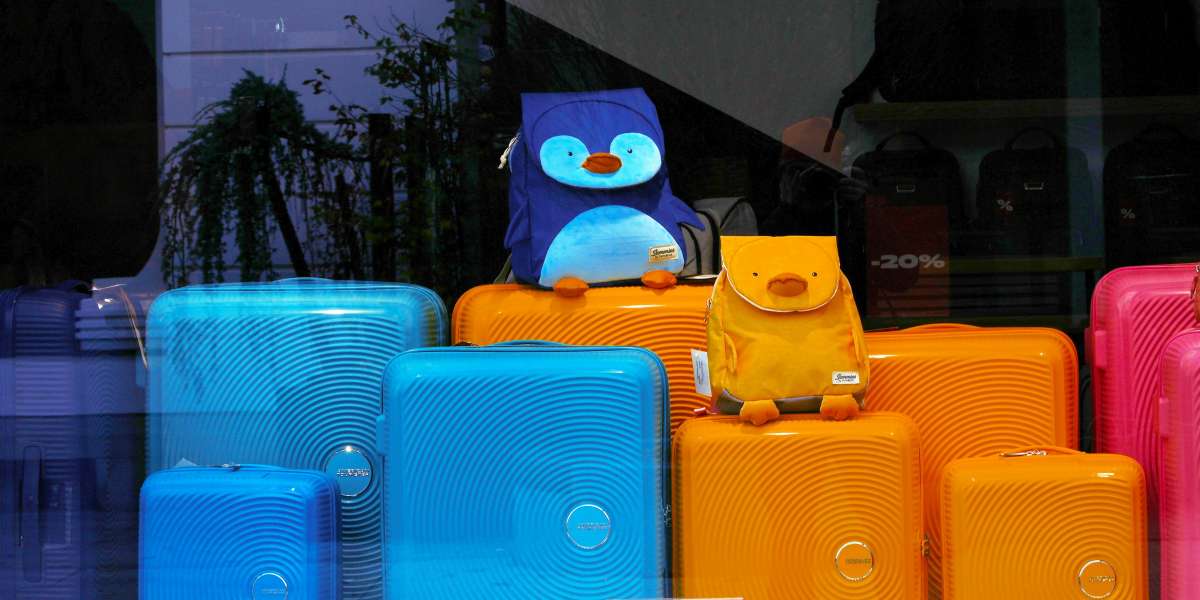

Traveling with children is one of those wonderfully chaotic experiences that parents simultaneously dread and cherish. Between the snack negotiations, the seat-kicking, and the eternal question of "are we there yet," there is one thing that can genuinely make a difference to the whole experience — getting your child the right travel bag. And no, that does not just mean the smallest bag that fits in the overhead bin. A good travel bag for a child is part functional tool, part source of pride, and on the best days, part adventure companion. If you have ever watched a child refuse to let go of their backpack because it has their favourite character on it, you already understand the assignment.
The market for children's travel bags has grown considerably over the past decade, and today parents have access to a genuinely impressive range of options — from whimsical animal-shaped daypacks to scaled-down versions of adult carry-ons. What makes this exciting is that the best children's bags manage to be both fun and genuinely useful, which is harder to pull off than it sounds. Get the balance wrong, and you end up with either a bag that is adorable but falls apart by the second day, or one that is extremely durable but that your child flat-out refuses to wear.
Why the Right Bag Matters More Than You Think
Before diving into styles and features, it is worth pausing on why a child's travel bag deserves real thought. When a child has their own bag — one they feel is truly theirs — something shifts. They become more responsible. They start keeping track of their things. They feel involved in the journey rather than just along for the ride. That sense of ownership is genuinely powerful, and a well-chosen bag is often what sparks it.
There is also a practical dimension. Parents who travel frequently will tell you that distributing the load matters. Handing your child their own water bottle, snacks, a small tablet or book, and perhaps a change of clothes in their own pack takes a surprising amount of weight — both literal and figurative — off your shoulders. When the bag fits well and the child is comfortable carrying it, they do so willingly. When it does not, you end up carrying it anyway, usually on top of everything else.
Ergonomics, then, should be a top priority. Children's spines are still developing, and a poorly designed bag worn improperly can cause real discomfort over long travel days. Look for padded, adjustable shoulder straps, a breathable back panel, and a chest clip that keeps the bag from swinging. Ideally, a loaded pack should weigh no more than ten percent of your child's body weight — a guideline paediatricians often recommend but parents regularly forget in the rush of packing.
The Case for Backpacks
Among all the bag styles available for children, the backpack remains the clear favourite, and for good reason. It distributes weight evenly across both shoulders, leaves the hands free (crucial for a child who insists on holding a stuffed animal at all times), and tends to offer the most interior space relative to its footprint.
Modern children's backpacks come in an extraordinary range of designs. There are packs shaped like owls, turtles, dinosaurs, and rockets. There are sleek designs in bold solid colours for older kids who've outgrown cartoon characters. There are even miniaturised versions of the kind of structured, compartmentalised bags adults use for work — what you might call a junior take on the laptop side bag aesthetic, designed for a child who wants to look organised and serious about their adventures. These typically feature multiple pockets, a top carry handle, and a streamlined silhouette that looks smart without being boring.
For school-age children who travel with tablets or e-readers, it is worth looking at backpacks with a dedicated device pocket. These are padded, usually fleece-lined, and keep electronics from sliding around with snacks and pencil cases. If you have ever had to replace a cracked screen mid-holiday, you will appreciate this detail enormously.
Rolling Luggage: A Child's Dream, a Parent's Compromise
Ask most children between the ages of four and eight what kind of travel bag they want, and the answer will almost always be a rolling suitcase. There is something deeply satisfying to a small person about pulling their own wheeled luggage through an airport, and the independence it represents is real. Rolling suitcases for children come in hardshell and softshell variants, just like adult versions, and the character options are seemingly endless — from superheroes to mermaids to football clubs.
The trade-off, of course, is practical. Rolling suitcases are less useful on uneven terrain, cobblestones, stairs, or anywhere that is not a smooth airport floor. If your trip involves a lot of that kind of travel, your child may end up handing you the handle within the first hour. That said, for families doing primarily urban or resort-based travel, a small rolling case can work beautifully. Many children's rolling cases also double as a seat — a feature that proves unexpectedly useful during long waits at the gate.
For families who want the best of both worlds, there are hybrid designs: rolling suitcases with backpack straps tucked into a rear panel. They roll when conditions allow and get hoisted onto small backs when they don't. These tend to be slightly heavier than a pure backpack of equivalent size, but the versatility is hard to argue with.
Features Worth Paying Attention To
Durability is non-negotiable. Children are not gentle with their belongings, and a travel bag is going to be shoved under seats, dragged across floors, and used as a makeshift pillow. Look for reinforced stitching, quality zippers (YKK is the gold standard), and water-resistant fabric. The latter is especially important — a sudden rain shower or a spilled drink shouldn't mean soaked belongings.
Organisation matters more than most people expect when buying for children. Kids do better with a place for everything — a specific pocket for their snack, a designated spot for their tablet, a loop for a water bottle. When there is a system, even young children can manage their own bags with minimal parental prompting. Chaos breeds frustration; structure breeds confidence.
Personalisation is also worth considering. Some bags come with name tag windows or luggage tags. Others can be customised with iron-on patches or embroidery. For children who are anxious about travel or separating from their things, seeing their name on their bag can be surprisingly reassuring.
Quality Brands and What's Available in Sri Lanka
The conversation about children's travel bags would be incomplete without discussing quality brands, because this is genuinely an area where investing slightly more pays dividends. Cheap bags fall apart. Zippers break. Straps fray. And a bag that gives out on day two of a holiday is worse than not having one at all.
One brand that has built a strong following among parents who care about quality and design is Mark Ryden. Originally known for their adult travel and laptop bags, Mark Ryden has expanded into a range that appeals to style-conscious families. Their bags are known for intelligent compartmentalisation, premium materials, and a clean aesthetic that manages to look modern without being cold. For Sri Lankan families and travellers, it is worth knowing that Mark Ryden in Sri Lanka is accessible through a growing number of authorised retailers and online platforms, making it easier than ever to get your hands on their products without international shipping costs or wait times.
The broader bag market in Sri Lanka has matured significantly, and this is especially visible in the backpack category. Parents researching laptop backpack prices for older children and teens — who increasingly need to carry devices to school and on trips — will find that the Sri Lankan market now offers a range of price points, from budget-friendly local options to premium international brands. The variation in laptop backpacks in Sri Lanka is genuinely impressive, and it is worth visiting a few stores or browsing reputable online shops before making a decision, since the difference in build quality between price tiers can be striking.
Packing the Bag: A Few Tips That Actually Help
Choosing the right bag is half the battle. Packing it well is the other half. With children, less is almost always more — the temptation to stuff every comfort item into the pack leads to a bag that is too heavy and a child who's miserable within twenty minutes of departure.
A useful approach is to let the child pack their own bag, with gentle guidance. Give them a short list: one change of clothes, one small toy or comfort item, headphones, snacks, a water bottle. Watch what they choose. You might be surprised — children often make sensible decisions when given the chance, and the act of choosing what goes in their bag builds investment in the journey.
It is also worth thinking about accessibility during travel. The things a child will need most often — snacks, a small toy, earphones — should be in the outermost pocket, not buried at the bottom. This sounds obvious, but in the rush of packing it is easy to overlook, and having to unpack half a bag at the airport is nobody's idea of fun.
The Bigger Picture
A travel bag for a child is, in a small but meaningful way, a statement about how you see them. It says: you are capable of carrying your own things. You are part of this journey. Your comfort and your preferences matter. The right bag — one that fits properly, holds up to the rigours of travel, reflects your child's personality, and makes them feel genuinely prepared — can set a positive tone for the entire trip.
It does not have to cost a fortune. But it does deserve real thought. Because the bag your child carries is not just a bag. On the best trips, it becomes part of the story they will tell later — the one with the dinosaur on the back, or the shiny red wheels, or their name stitched across the front. And those details, small as they seem, are often the ones that stick.