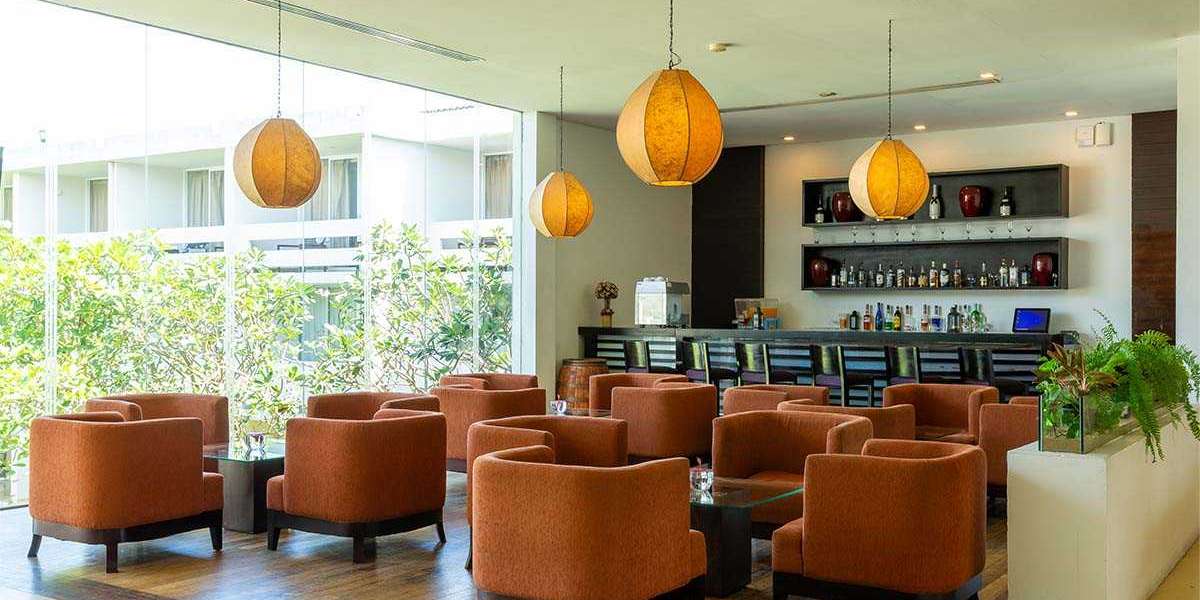

There is a reason people will happily pay more for a table that looks out over the water, even when the menu is not all that different from the one at the restaurant down the street. A plate of grilled fish tastes different when you can hear waves rolling in behind you, and a glass of wine feels a little more special when the sky is doing something spectacular with the sunset. Anyone who has stayed at a beach resort and eaten dinner with sand still on their feet knows exactly what this feeling is, even if they have never stopped to ask why it happens.
The Science Behind the Setting
Taste is not purely a matter of tongue and tastebuds. Flavour is something the brain assembles from a mix of inputs — smell, sound, temperature, memory, and mood all get folded into what we eventually call "taste." Researchers who study this, often under the label of neurogastronomy, have found that background noise, lighting, and even the weight of cutlery in your hand can shift how sweet, salty, or rich a dish seems. Ocean settings tend to stack the deck in food's favour. The sound of waves is what scientists call a "consonant" sound, meaning it does not compete with conversation or clash with the senses the way traffic noise or loud music might. Instead, it works almost like a natural white noise machine, calming the nervous system and, in turn, making people more receptive to enjoying what is in front of them.
There is also the matter of association. Salt air, warm breeze, and the visual of an open horizon are linked in most people's minds with holidays, relaxation, and freedom from routine. When you sit down to eat in that environment, your brain is not just processing the food — it is replaying every good memory it has of vacations, celebrations, and time off. That emotional backdrop primes you to enjoy the meal more than you might on a rushed Tuesday lunch break at your desk.
Why Location Changes Everything
Chefs who work in oceanfront settings often say the sea does half their job for them. A simple dish of prawns with garlic and lime can feel elevated simply because of where it is served. This does not mean quality stops mattering — far from it — but it does mean that good food and a good setting reinforce each other rather than compete. A mediocre dish in a stunning location might get a pass it wouldn't get elsewhere, while an excellent dish in a dull, fluorescent-lit room can feel oddly flat.
This is part of why coastal towns tend to develop such strong food cultures. Take a look at how many restaurants in Wattala have leaned into their proximity to the coast, building open-air seating areas and large windows that let the sea breeze in rather than keeping it out. It is not an accident. Restaurant owners in coastal areas understand that they are not just selling a meal — they are selling an experience that customers will remember and talk about long after the plates are cleared.
The Role of Comfort and Convenience
Ambience is not only about candlelight and crashing waves. Comfort plays a bigger role than people give it credit for. If you are stressed about how far you have to travel back to your room, or worried about the cost of your stay, that mental noise bleeds into your enjoyment of dinner. This is one reason travellers researching Wattala hotel rooms prices before booking a coastal getaway tend to report better overall satisfaction with their trip. When accommodation is sorted and reasonably priced, there is a kind of mental clearing that happens — one less thing to think about, which leaves more room to actually enjoy the meal, the company, and the view.
It also explains why so many properties near the coast have started bundling dining with accommodation, rather than treating them as separate business lines. Guests don't want to hop in a car after a long day at the beach just to find a decent restaurant. They want to walk downstairs, or a few meters along a path lit with lanterns, and sit down to a meal that matches the quality of their day. Hospitality businesses that understand this tend to build loyalty simply by removing friction between comfort and cuisine.
Weddings, Celebrations, and Shared Memory
Nowhere is the link between setting and satisfaction more obvious than at big life events. Ask anyone who has been to a wedding by the sea, and they will usually describe the food before they describe much else — not necessarily because it was exceptional, but because they remember it in the context of golden light, live music drifting over from a nearby setup, and the particular calm that comes from being near water. This is exactly why so many couples now search specifically for wedding venues with accommodation near the coast. It solves two problems in one decision: guests get a beautiful backdrop for photos and toasts, and nobody has to worry about transportation late into the night. The food, in that setting, becomes part of a much larger sensory memory that guests will replay for years.
Event planners have caught on to this too. A catering menu that might look ordinary on paper suddenly reads as thoughtful and elegant when paired with a seaside terrace and the right lighting. It is not manipulation so much as an acknowledgment that humans experience meals holistically, not just through taste buds in isolation.
Bringing It Home
None of this means restaurants inland are somehow lesser, or that ambience is a trick used to distract from average food. It simply means that where and how we eat is deeply tied to how much we enjoy what we eat. The ocean, in particular, seems to hit several psychological notes at once: it slows us down, it triggers positive memories, and it removes the low hum of urban stress that usually competes for our attention at mealtimes.
So, the next time a meal by the water tastes better than you expected, it is worth remembering that your senses are not being fooled — they are simply working the way they are designed to. Food has never existed in a vacuum, and the best meals are usually the ones where the setting and the plate are telling the same story. Whether it is a quiet dinner after a day at the beach, a family meal enjoyed as the tide comes in, or a wedding toast made as the sun dips below the horizon, the ocean has a way of turning an ordinary meal into something people carry with them long after the check is paid.








