
Ask any employee what they dislike most about business travel, and there's a good chance "waiting for reimbursement" makes the list. It's a strange kind of frustration - you spend your own money for the company, do everything right, and then wait days or weeks just to get it back.
If that sounds like a familiar complaint inside your organization, the problem usually isn't the employees. It's the process. A slow, unclear, or overly manual expense reimbursement process creates friction for everyone - employees who feel out of pocket, managers stuck approving unclear claims, and finance teams buried under paperwork.
The good news is that this is one of the most fixable parts of the entire travel and expense workflow. Let's break down how reimbursement actually works, where it typically breaks down, and what a well-designed process looks like.
What Is the Expense Reimbursement Process?
The expense reimbursement process is the series of steps a company follows to pay employees back for business-related costs they've covered out of pocket - things like flights, hotels, client meals, cab fares, or even small purchases made during a work trip.
At its core, it involves four things: the employee submitting proof of expense, a manager or finance team verifying it against company policy, approval being granted, and the money actually being paid out. Simple in theory - but each of those steps can become a bottleneck if it's handled manually.
Why the Reimbursement Process Deserves More Attention
It's easy to treat reimbursement as an administrative afterthought, but it has a real impact on both morale and financial accuracy.
Delayed reimbursements are consistently one of the top frustrations employees report about business travel. For frequent travelers, this gets even worse - they may be juggling multiple unsettled claims while already heading out on their next trip. That kind of ongoing uncertainty affects how employees feel about traveling for work at all.
On the finance side, a slow or inconsistent reimbursement process makes it harder to track true spend in real time, which throws off budgeting and cash flow planning. And when the process lacks structure, it also becomes easier for errors - or even fraudulent claims - to slip through unnoticed.
How the Expense Reimbursement Process Typically Works
Step 1: Expense Submission
The employee compiles proof of their expenses - receipts, invoices, boarding passes - and submits them along with a description of each cost. In manual setups, this often means physical paperwork; in digital systems, it's usually a scanned receipt uploaded through an app.
Step 2: Verification Against Policy
Whoever handles approvals checks the submitted claim against company travel and expense policy. Is the amount within the allowed limit? Is the expense category reimbursable at all? Does it have the required proof attached?
Step 3: Manager or Finance Approval
Once verified, the claim moves to an approver - often a direct manager, sometimes finance as a second layer. In organizations with multiple approval levels, this step alone can take days if it's not automated.
Step 4: Payment Processing
After approval, the reimbursement is processed - ideally as a direct transfer to the employee's bank account. This is also when the transaction typically gets logged in the company's accounting system.
Step 5: Record-Keeping and Reporting
The final step is often overlooked but important: keeping a clear record of the claim, its approval trail, and the payment for future reference, audits, or reporting.
Common Bottlenecks That Slow Down Reimbursement
Missing or Disorganized Receipts
A large share of reimbursement delays trace back to a simple problem - employees losing receipts or submitting incomplete claims. Without a receipt, there's often no easy way to verify or approve a claim quickly.
Unclear Policy Guidelines
When employees aren't sure what's reimbursable, they either under-claim (and lose money) or submit claims that get rejected and sent back - both of which slow the whole process down.
Manual Verification
Cross-checking every claim by hand takes time, especially in larger organizations with a high volume of business travel. It also introduces more room for human error.
Too Many Approval Layers
Multiple approvals aren't inherently a problem, but when each layer is handled manually via email, the claim can sit untouched for days waiting on a single response.
Disconnected Systems
If your expense process isn't integrated with payroll or accounting, someone has to manually re-enter data - adding time and increasing the risk of mismatched records.
Inconsistent Currency and Rate Handling
For companies with employees traveling internationally, manually calculating currency conversions or applicable per diem rates adds another layer of delay. Without a system to standardize this automatically, finance teams often have to double-check every foreign expense line by line.
No Clear Escalation Path
When a claim sits with an approver who's on leave or simply hasn't gotten to it, manual processes rarely have a built-in way to escalate or reroute it. The claim just stays stuck until someone happens to notice.
The Real Cost of a Slow Reimbursement Process
It's worth pausing on what a sluggish reimbursement cycle actually costs a business, beyond just employee frustration.
For one, it distorts your understanding of real-time spend. If claims take three weeks to move through approval, the expense data your finance team sees at any given moment is already outdated - making budgeting decisions less accurate than they should be.
It also affects how employees behave. When reimbursement is unpredictable, employees may become more cautious about spending on legitimate business needs, or in some cases, less careful about accurately documenting expenses simply because the process feels tedious either way. Neither outcome is good for the business.
And there's a retention angle too. Frequent travelers - often your most valuable, high-performing employees - are the ones most affected by reimbursement delays. Making their expense experience unnecessarily difficult is a small but real factor in overall job satisfaction.
How to Speed Up and Simplify Reimbursement
1. Set Clear, Simple Policy Guidelines
Ambiguity is one of the biggest causes of delayed or incorrect claims. A clearly written policy - with specific limits, categories, and required documentation - reduces back-and-forth significantly.
2. Digitize Receipt Capture
Letting employees photograph and upload receipts as soon as an expense happens (instead of saving them for later) drastically reduces the "lost receipt" problem.
3. Automate Policy Checks
Instead of manually reviewing every claim, an automated system can flag anything outside policy instantly - freeing up approvers to focus only on exceptions.
4. Simplify Approval Chains
Where possible, auto-approve low-risk, low-value expenses (like a meal under a set limit) so approvers only need to weigh in on claims that genuinely require judgment.
5. Offer Direct Bank Transfers
Skipping cheques in favor of direct transfers removes an unnecessary delay at the very last step of the process.
6. Integrate with Accounting and Payroll
When your reimbursement system talks directly to your accounting software, entries post automatically - saving time and reducing mismatched records.
7. Collect Feedback Regularly
Asking employees about their reimbursement experience after each trip helps you catch friction points you might not otherwise notice.
The Role of Software in Modern Reimbursement
A lot of the bottlenecks above share a common root cause: manual handling. This is exactly why more companies are shifting to dedicated expense management software.
With the right system in place, employees capture expenses on the go instead of saving them for later. Claims are automatically checked against policy the moment they're submitted, so violations are flagged instantly rather than discovered days later. Approvals happen through a simple dashboard instead of scattered email threads, and once approved, payment can be processed and logged into accounting systems without any manual re-entry.
The result is a reimbursement cycle that often shrinks from weeks to just a few days - a meaningful difference for both employee satisfaction and financial accuracy.
Why SavvyHRMS Makes Reimbursement Simple
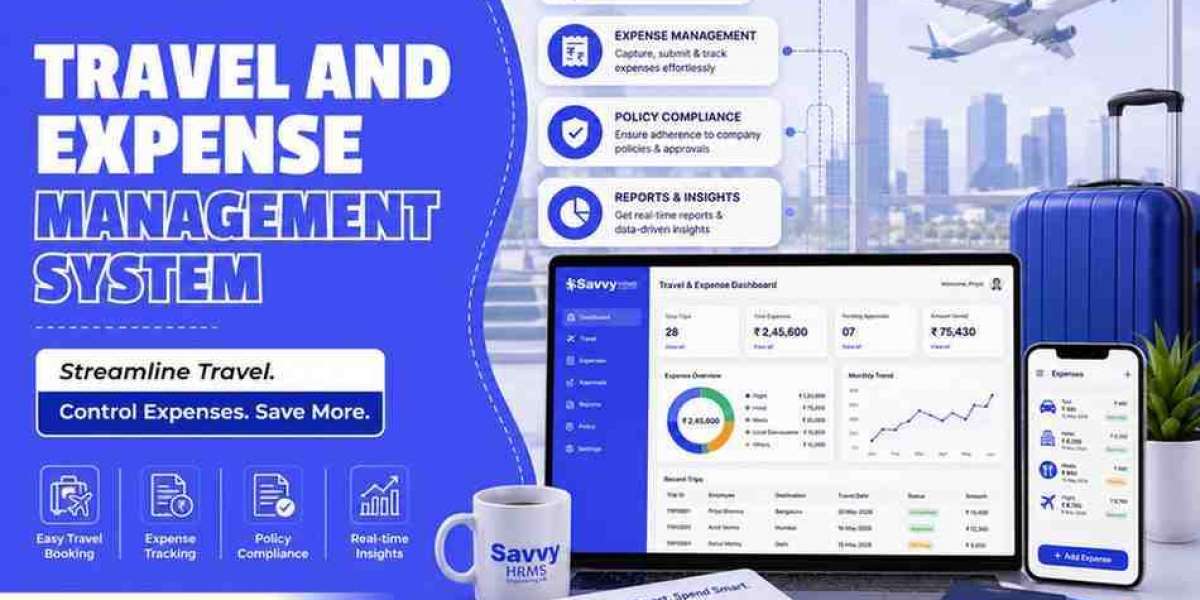
This is where SavvyHRMS comes in. Instead of managing reimbursements through a separate, disconnected tool, SavvyHRMS brings expense management directly into the same platform you already use for payroll, attendance, and employee records.
With SavvyHRMS, businesses get:
- Real-time expense capture, so employees can log costs the moment they occur
- Automated policy compliance checks, catching issues before they reach an approver
- Streamlined, configurable approval workflows that match your actual team structure
- Direct integration with payroll, so reimbursements are processed and recorded without manual data entry
- A single dashboard for HR, finance, and employees - no switching between disconnected systems
For businesses looking to shorten reimbursement timelines and reduce the manual workload on finance teams, SavvyHRMS offers a straightforward way to bring structure and speed to the entire process.
Conclusion
A slow expense reimbursement process might seem like a minor operational detail, but it has a real ripple effect - on employee morale, on financial visibility, and on how much time your finance team spends on repetitive manual work. The good news is that most of the common bottlenecks, from lost receipts to tangled approval chains, are entirely fixable with the right structure in place.
Clear policies, digitized receipt capture, and automated approvals can turn a process that used to take weeks into one that takes just a few days.
If you're looking to simplify reimbursement across your organization, SavvyHRMS brings expense management together with the rest of your HR operations - helping employees get paid back faster and giving your finance team a clearer, more reliable process to work with.
Frequently Asked Questions
- What is the expense reimbursement process?
It's the series of steps a company follows to pay employees back for business expenses they've covered out of pocket - including submission, policy verification, approval, and payment.
- How long should the expense reimbursement process typically take?
With an automated system, reimbursements can often be completed within a few days. Manual processes, by comparison, can take anywhere from one to several weeks depending on approval layers.
- Why do reimbursement delays happen so often?
Common causes include missing receipts, unclear policy guidelines, manual verification steps, and multi-layer approval chains that rely on email-based communication.
- What documents are usually required for expense reimbursement?
Typically, employees need to submit receipts or invoices, a description of the expense, and sometimes supporting documents like boarding passes or itineraries, depending on the expense category.
- Can the reimbursement process be automated?
Yes. Expense management software can automate receipt capture, policy checks, approval routing, and payment processing - significantly reducing manual work and delays.
- How does automation reduce reimbursement errors?
By checking every claim against policy in real time and flagging anomalies automatically, automation removes much of the human error that comes with manual review.
- What's the difference between expense reimbursement and expense reporting?
Expense reporting refers to employees documenting and submitting their expenses, while reimbursement is the actual process of reviewing, approving, and paying back those expenses.








