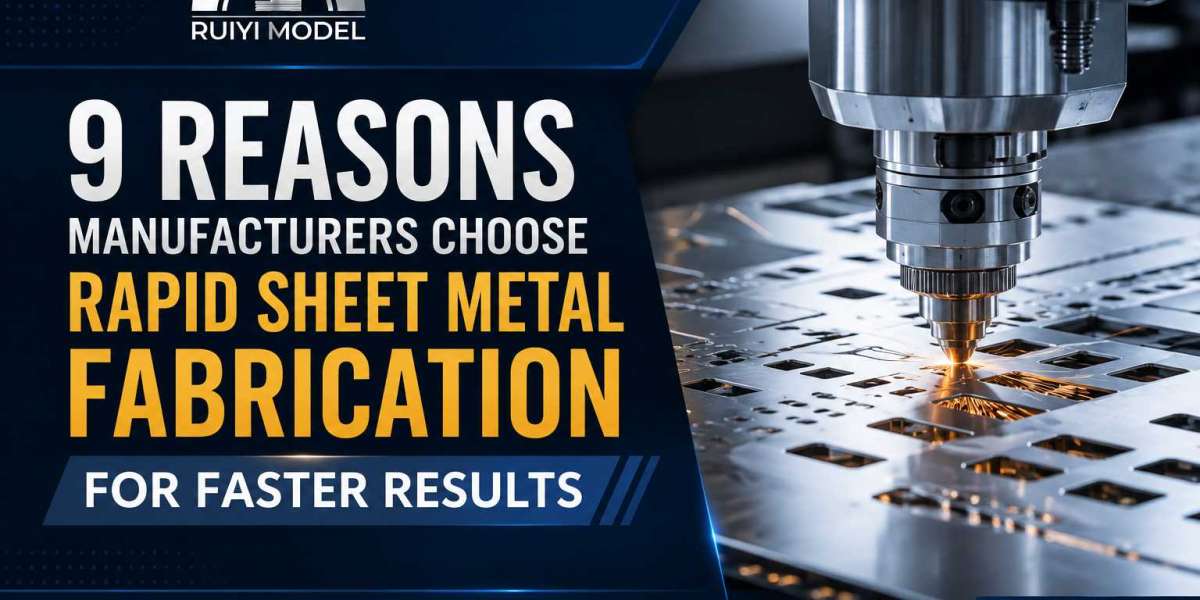

Manufacturers today need to move from concept to functional parts without unnecessary delays, high tooling costs, or complicated production steps. Rapid sheet metal fabrication gives product developers a practical way to create accurate metal components quickly while maintaining flexibility during prototyping and low-volume production. From automotive and industrial equipment to electronics and automation, this approach helps engineering teams shorten development cycles and respond faster to changing market requirements.
1. Faster Product Development
One of the biggest advantages is speed. Traditional manufacturing methods can require extensive tooling preparation before production begins. Sheet metal processes can often move from a digital drawing to fabricated components with fewer preliminary steps.
For product engineers, this means prototypes can be produced and evaluated sooner. Design teams can test dimensions, assembly fit, functionality, and appearance before committing to larger production quantities.
This is particularly useful when a product is still undergoing engineering changes. Instead of waiting weeks to evaluate a revised design, manufacturers can obtain updated components much sooner.
2. Lower Tooling Requirements
Tooling represents a significant cost consideration for many manufacturing projects, especially when production volumes are uncertain.
Fabrication processes such as laser cutting, bending, welding, and forming can reduce the need for dedicated tooling in many applications. This makes the process attractive for prototypes, custom components, replacement parts, and small production runs.
Lower upfront investment also gives startups and product-development teams more freedom to validate their designs before making a larger manufacturing commitment.
3. Ideal for Prototyping
A prototype needs to do more than look like the final product. It should provide engineers with an opportunity to evaluate how a component behaves in a real assembly.
Fabricated metal prototypes can help teams assess:
- Dimensional accuracy
- Assembly compatibility
- Structural strength
- Mounting points
- Enclosure fit
- Surface appearance
- Functional performance
This practical feedback can reveal design problems that may not be obvious in CAD software.
For European and Indian manufacturers working with distributed engineering teams, faster physical prototypes can also simplify communication between designers, suppliers, and production departments.
4. Flexible Material Options
Different applications require different mechanical and aesthetic characteristics. Sheet metal manufacturing supports a broad selection of materials, allowing engineers to choose based on strength, weight, corrosion resistance, conductivity, appearance, and budget.
Common choices include:
- Aluminum
- Stainless steel
- Mild steel
- Brass
- Copper
- Galvanized steel
Material selection should always consider the component's operating environment and intended function. For example, aluminum may be suitable when weight reduction is important, while stainless steel can be preferred where corrosion resistance and durability are major considerations.
5. Supports Complex Custom Parts
Modern products rarely consist entirely of standard components. Enclosures, brackets, panels, frames, covers, chassis, mounting plates, and other components often require dimensions specific to a particular application.
Advanced cutting and bending equipment allows manufacturers to produce customized geometries from digital engineering drawings.
This is particularly valuable for machinery manufacturers and automation companies because components can be designed around existing assemblies rather than forcing the entire product to accommodate standard sizes.
6. Better Design Validation
A major advantage of quick metal prototyping is the ability to identify design issues before mass production.
Imagine developing an equipment enclosure. The CAD model may appear correct, but a physical prototype could reveal that a cable opening is too small, a mounting hole needs adjustment, or two components interfere during assembly.
Finding such issues during prototyping is considerably more convenient than discovering them after hundreds or thousands of parts have been manufactured.
This creates a more controlled product-development workflow:
Design → Prototype → Test → Improve → Validate → Produce
The result can be fewer production changes and less material waste.
7. Suitable for Low Volume Production
Not every project requires thousands of components. Some businesses need only a few dozen, a few hundred, or another limited quantity.
Low-volume manufacturing allows companies to produce the required quantity without immediately investing in high-volume tooling.
This can benefit:
- New product launches
- Replacement components
- Specialized machinery
- Industrial prototypes
- Custom equipment
- Engineering samples
- Pilot production
For businesses testing a new product in the Indian or European market, this flexibility can reduce the financial risk associated with launching an unproven design.
8. Multiple Finishing Possibilities
Fabricated components often need additional finishing to achieve the desired appearance or performance.
Depending on the material and application, available treatments may include:
- Powder coating
- Anodizing
- Plating
- Brushing
- Polishing
- Painting
Finishing can improve corrosion resistance, surface appearance, wear resistance, and overall product presentation.
For consumer-facing equipment and industrial products alike, selecting an appropriate finish can make a significant difference in both functionality and visual quality.
9. Simplifies Supply Chain Planning
Speed is not only about manufacturing a component quickly. It is also about reducing unnecessary complexity throughout the development and purchasing process.
Working with a capable manufacturing partner can allow businesses to consolidate processes such as material sourcing, cutting, bending, welding, finishing, and inspection.
This can simplify supplier coordination and make project communication easier.
For international customers, supplier capability becomes even more important. Clear technical communication, engineering drawing support, quality documentation, production updates, and reliable shipping arrangements can all contribute to a smoother procurement experience.
What Should You Consider Before Ordering?
Choosing a fabrication partner should not be based on price alone. Several technical and commercial factors can influence the final result.
Material
Confirm that the supplier can work with the material required for your application and understands its forming and finishing characteristics.
Tolerances
Not every component requires extremely tight tolerances. Discuss the critical dimensions with the manufacturer so the production method matches the engineering requirements.
Part Geometry
Complex bends, thin walls, small holes, and unusual geometries can affect manufacturability. Sharing accurate CAD files and technical drawings early can help identify potential issues.
Surface Finish
Clearly specify whether the part requires painting, powder coating, anodizing, polishing, plating, or another treatment.
Production Quantity
Prototype quantities and production volumes may require different manufacturing strategies. A good supplier should be able to recommend an appropriate approach based on quantity and application.
Quality Control
Ask about inspection procedures, measurement equipment, material verification, and quality documentation when the application requires controlled manufacturing.
Why Is Speed Important in Modern Manufacturing?
Shorter development cycles can give manufacturers a meaningful competitive advantage.
When engineering teams can test and modify components faster, they can respond to customer feedback and market requirements without waiting for lengthy production cycles.
Speed also becomes important when companies operate in competitive sectors such as automotive, robotics, automation, electronics, and industrial machinery.
However, speed should never come at the expense of quality. The real objective is faster development with dependable dimensional accuracy and repeatable production quality.
How Ruiyi Supports Custom Metal Projects
Ruiyi Industrial Manufacturer provides custom sheet metal manufacturing for applications requiring precision components, prototypes, and production parts. Its capabilities include processes such as laser cutting, CNC bending, welding, and other fabrication operations.
The company works with materials including aluminum, stainless steel, steel, copper, and brass and supports different finishing requirements depending on the project.
Ruiyi also highlights ISO 9001:2015 and ISO 13485 certifications, engineering support, inspection capabilities, and international manufacturing experience. These factors can be useful for companies looking for a manufacturing partner rather than simply a component supplier.
Frequently Asked Questions
What is rapid sheet metal fabrication used for?
It is commonly used for prototypes, custom enclosures, brackets, panels, frames, chassis, machine components, and low-volume production parts where development speed and design flexibility are important.
Which materials can be used for sheet metal parts?
Common materials include aluminum, stainless steel, mild steel, galvanized steel, brass, and copper. The appropriate material depends on strength, weight, corrosion resistance, conductivity, appearance, and application requirements.
Is sheet metal fabrication suitable for prototypes?
Yes. It is particularly useful for functional prototypes because engineers can evaluate the actual metal component for fit, strength, assembly, and performance before moving into larger production.
Can fabricated parts receive surface finishing?
Yes. Depending on the material and project requirements, components may receive finishes such as powder coating, anodizing, polishing, brushing, plating, or painting.
How can manufacturers reduce fabrication costs?
Cost can often be controlled through suitable material selection, simplified part geometry, sensible tolerances, efficient nesting, appropriate finishing, and choosing a production method that matches the required quantity.
What files are normally required for a fabrication quote?
Manufacturers commonly request CAD files such as STEP, STP, DWG, DXF, or other compatible engineering formats along with drawings specifying dimensions, tolerances, materials, finishes, and special requirements.
Is sheet metal manufacturing suitable for international orders?
Yes. International manufacturers can work with overseas customers when they have suitable engineering communication, quality-control processes, production capabilities, and shipping arrangements. Clear technical documentation is especially important for successful cross-border projects.
Conclusion
Manufacturers need more than speed—they need a practical production process that balances development time, quality, cost, flexibility, and scalability. From functional prototypes to low-volume production, sheet metal manufacturing can help engineering teams turn digital designs into dependable physical components while adapting quickly to design changes.
For businesses in India, Europe, and other international markets, choosing an experienced manufacturing partner can make the process easier from engineering review through production and finishing.
Ruiyi Industrial Manufacturer provides custom manufacturing solutions for companies seeking dependable metal components, prototypes, and production parts. To explore its capabilities or request a quotation, visit Ruiyi Industrial Manufacturer or learn more about its sheet metal fabrication services.