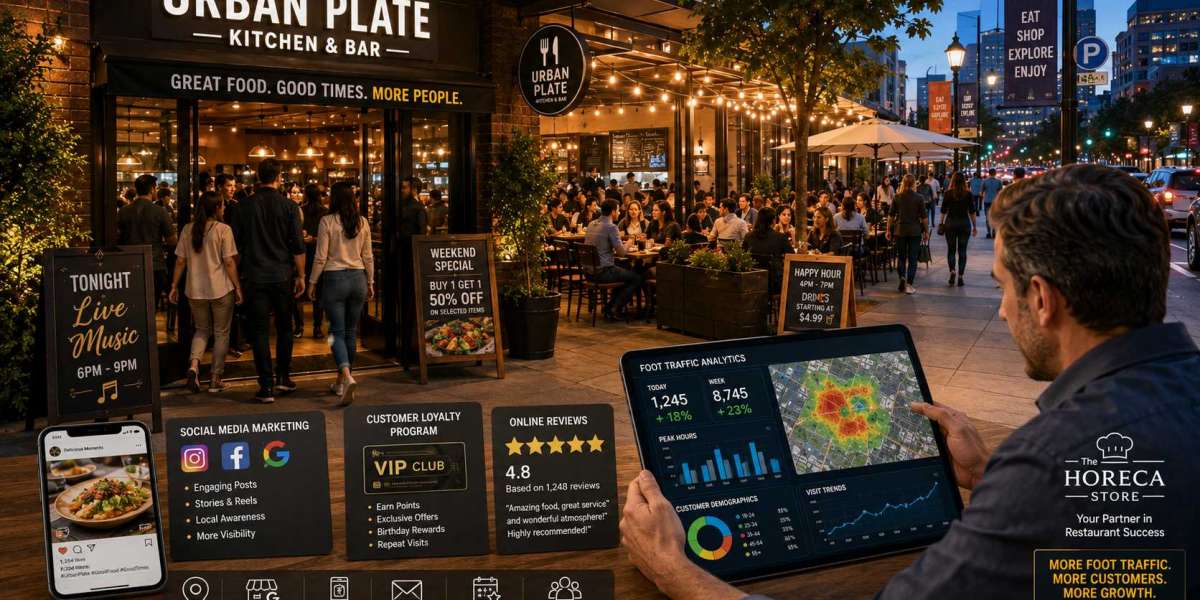

Increasing customer visits is one of the biggest priorities for restaurant owners. Even a restaurant with excellent food, attractive interiors, and great service can struggle when potential customers do not notice it or have little reason to walk through the door. Learning how to increase foot traffic in restaurant locations requires a combination of visibility, local marketing, customer experience, location strategy, promotions, and data-driven decision-making.
Foot traffic refers to the number of people visiting your physical restaurant. While online ordering and delivery are important revenue channels, in-person customers can create stronger opportunities for repeat business, upselling, social interaction, and brand loyalty.
The good news is that restaurant owners can take practical steps to increase visits without relying exclusively on expensive advertising. From improving storefront visibility to understanding the surrounding market, the right strategies can help attract new customers and encourage existing customers to return.
What Is Restaurant Foot Traffic?
Restaurant foot traffic is the number of customers or visitors entering a restaurant during a specific period. It can be measured daily, weekly, monthly, or during specific periods such as lunch and dinner.
Understanding your current traffic is the first step toward increasing it.
Track metrics such as:
Daily customer visits
Lunch traffic
Dinner traffic
Weekend traffic
Average transaction value
New versus returning customers
Peak hours
Slow periods
Reservation volume
Walk-in customers
Once you know when traffic is strongest and weakest, you can create targeted strategies rather than applying the same promotion throughout the entire day.
1. Improve Your Restaurant's Location Strategy
One of the most important factors affecting foot traffic is location. A restaurant located where target customers naturally live, work, shop, or spend leisure time has more opportunities to generate visits.
When evaluating your location, consider:
Nearby population density
Office buildings
Shopping areas
Residential communities
Entertainment venues
Schools and colleges
Hotels
Public transportation
Parking
Pedestrian activity
Competitor locations
If you are considering opening a new restaurant, Restaurant Site Finder can help you evaluate potential locations using market, demographic, competition, and site-selection insights.
For existing restaurants, location cannot always be changed. However, understanding the surrounding trade area can help you identify the customer groups and nearby businesses that should be included in your marketing strategy.
2. Make Your Restaurant Easy to Notice
A potential customer cannot visit a restaurant they do not notice.
Your storefront should communicate what your restaurant offers quickly and clearly. Use visible signage, attractive displays, menu boards, and lighting to make the property stand out.
Your exterior should answer three basic questions:
What is this place?
What does it serve?
Why should I go inside?
A well-designed storefront can be particularly important in high-traffic areas where people make decisions within seconds.
If your restaurant is difficult to see from the road or sidewalk, consider improving signage, exterior lighting, window graphics, entrance displays, and directional signs where permitted.
3. Optimize Your Google Business Profile
Many customers search for nearby restaurants before deciding where to eat. Your Google Business Profile can therefore play an important role in driving physical visits.
Keep your profile accurate and updated with:
Restaurant name
Address
Phone number
Opening hours
Website
Menu
High-quality photos
Reservation information
Ordering options
Encourage satisfied customers to leave genuine reviews. Respond professionally to reviews and keep your business information consistent across relevant online platforms.
High-quality photos can also influence customer decisions. Showcase popular dishes, your dining room, storefront, and overall atmosphere.
4. Create Offers for Slow Periods
One effective way to increase foot traffic is to identify periods when your restaurant is underperforming.
For example, if Tuesday afternoons are consistently slow, create an offer specifically for that period instead of discounting your entire week.
Potential promotions include:
Lunch specials
Early dinner offers
Weekday promotions
Family meal deals
Student offers
Business lunch packages
Happy-hour promotions
Limited-time menu items
The objective should be to generate additional visits without unnecessarily reducing revenue during periods when demand is already strong.
5. Build a Strong Local Marketing Strategy
Restaurants depend heavily on local customers, making local marketing especially valuable.
Use channels that reach people within your trade area. These may include local search optimization, social media, email marketing, neighborhood publications, community events, and partnerships with nearby businesses.
For example, a restaurant near office buildings could partner with local companies for lunch promotions or catering. A restaurant near a residential neighborhood could create family-focused promotions.
The closer your marketing is to the customer's everyday environment, the more relevant it becomes.
6. Use Social Media to Drive In-Person Visits
Social media can do more than generate likes and followers. It can encourage customers to visit your physical location.
Post content that creates a reason to come in, such as:
New dishes
Limited-time specials
Behind-the-scenes content
Chef features
Customer experiences
Seasonal menus
Events
Live music
Special occasions
Short videos can show food preparation, restaurant atmosphere, or popular menu items.
Always include useful location information when appropriate. Customers should not have to search extensively to find your restaurant after seeing your content.
7. Host Events and Experiences
Events can give customers a specific reason to visit your restaurant.
Depending on your concept and audience, consider:
Live music
Trivia nights
Food tastings
Cooking demonstrations
Sports viewing events
Seasonal celebrations
Community gatherings
Networking events
Events can be especially effective during traditionally slower periods.
The key is to create experiences that fit your brand rather than hosting random events simply to generate traffic.
8. Create a Customer Loyalty Program
Getting a customer through the door once is valuable. Getting them to return regularly is even better.
A loyalty program can encourage repeat visits by rewarding customers for continued business.
Rewards could include:
Points
Free menu items
Birthday rewards
Exclusive offers
Early access to new dishes
Member-only promotions
Keep the program simple. Customers should easily understand how they earn and redeem rewards.
A loyalty program can also help restaurants communicate with customers through email or mobile marketing, provided customers have voluntarily opted into those communications.
9. Improve the Dining Experience
Marketing can attract customers, but the customer experience determines whether they return.
Evaluate the complete dining journey:
Finding the restaurant
Parking or arriving
Entering
Being greeted
Ordering
Waiting
Eating
Paying
Leaving
Look for unnecessary friction.
Are customers waiting too long to be seated? Is ordering confusing? Are popular dishes frequently unavailable? Is the payment process slow?
Improving these small details can increase customer satisfaction and encourage repeat visits.
10. Use Your Menu as a Traffic Driver
Your menu can be one of your strongest marketing tools.
Create signature dishes that customers associate with your restaurant. Seasonal or limited-time items can also give existing customers a reason to return.
Consider highlighting:
Best-selling dishes
Signature meals
Chef specials
Seasonal items
Local specialties
High-margin dishes
Food presentation matters as well. Attractive dishes can encourage customers to share photos and videos, generating additional organic exposure.
11. Partner With Nearby Businesses
Restaurants can benefit from partnerships with businesses that serve similar customer groups without directly competing for the same purchase.
Potential partners include:
Hotels
Gyms
Offices
Retail stores
Event venues
Local attractions
Apartment communities
Coworking spaces
For example, a nearby hotel could recommend your restaurant to guests, while your restaurant could provide a special offer for hotel visitors.
These partnerships can create a consistent source of local referrals.
12. Make Your Restaurant Walkable and Accessible
If you want to understand how to increase foot traffic in restaurant locations, accessibility deserves special attention.
Customers should be able to reach your entrance comfortably from nearby sidewalks, parking areas, and transportation points.
Evaluate:
Sidewalk access
Entrance visibility
Parking
Bicycle access
Public transportation
Accessibility for customers with disabilities
Clear directions
If customers have difficulty finding the entrance or accessing the property, even strong demand may not translate into visits.
13. Analyze Competitor Traffic
Competitors can provide useful information about local customer behavior.
Observe nearby restaurants at different times and days. Look for patterns in:
Customer volume
Peak periods
Popular menu categories
Promotions
Seating utilization
Customer demographics
Do not simply copy competitors. Instead, identify what appears to attract customers and determine how your restaurant can provide something different or better.
14. Measure What Actually Works
Increasing foot traffic should be treated as a measurable business objective.
Track the results of your campaigns and promotions.
For example, compare:
Customers before promotion vs. customers during promotion
Also monitor:
Revenue per visit
Average order value
Repeat visit rate
Promotion redemption
Customer acquisition
Online-to-offline conversions
Daypart performance
If a promotion generates many customers but produces very little profit, it may not be a successful strategy.
The goal is not simply more people. The goal is more profitable customer visits.
Common Mistakes When Trying to Increase Foot Traffic
Some restaurant owners make the mistake of relying entirely on discounts. While promotions can create short-term traffic, excessive discounting can reduce margins and train customers to wait for deals.
Another mistake is ignoring the location and surrounding market. Marketing cannot fully compensate for a poor site.
Restaurants may also focus too heavily on attracting new customers while neglecting existing customers. Retention strategies can often produce stronger long-term value.
Finally, avoid measuring success only by social media engagement. Likes and views are useful indicators, but they do not necessarily translate into restaurant visits or revenue.
Final Thoughts
Learning how to increase foot traffic in restaurant businesses requires more than running occasional discounts. Successful restaurants combine strong visibility, local marketing, customer loyalty, memorable experiences, strategic partnerships, excellent service, and careful market analysis.
For restaurants considering a new location, site selection is especially important. Understanding demographics, competition, traffic patterns, nearby businesses, and customer demand before committing to a property can create a stronger foundation for future growth.
Restaurant Site Finder for existing restaurants, start by identifying where your current traffic comes from and when demand is weakest. Then test targeted strategies, measure results, and invest more heavily in the tactics that generate profitable visits.
Ultimately, increasing restaurant foot traffic is about giving the right customers a compelling reason to visit—and a great enough experience that they want to come back.
FAQs About Increasing Restaurant Foot Traffic
How can I increase foot traffic to my restaurant quickly?
Start with highly targeted strategies such as limited-time promotions, local social media campaigns, events, partnerships with nearby businesses, and improved storefront visibility. Focus on slow periods where additional customers can have the greatest impact.
Does restaurant location affect foot traffic?
Yes. Location can influence visibility, accessibility, customer demographics, competition, parking, pedestrian activity, and overall demand. A location should be evaluated based on how well it matches the restaurant's target customers.
How can social media increase restaurant foot traffic?
Social media can showcase food, promotions, events, and the restaurant experience while giving local customers a reason to visit. Location-focused content and limited-time offers can help convert online attention into physical visits.
How do I measure restaurant foot traffic?
Track customer visits by day, time, and customer type. Compare traffic before and after marketing campaigns and monitor related metrics such as revenue per visit, average order value, repeat visits, and promotion redemption.