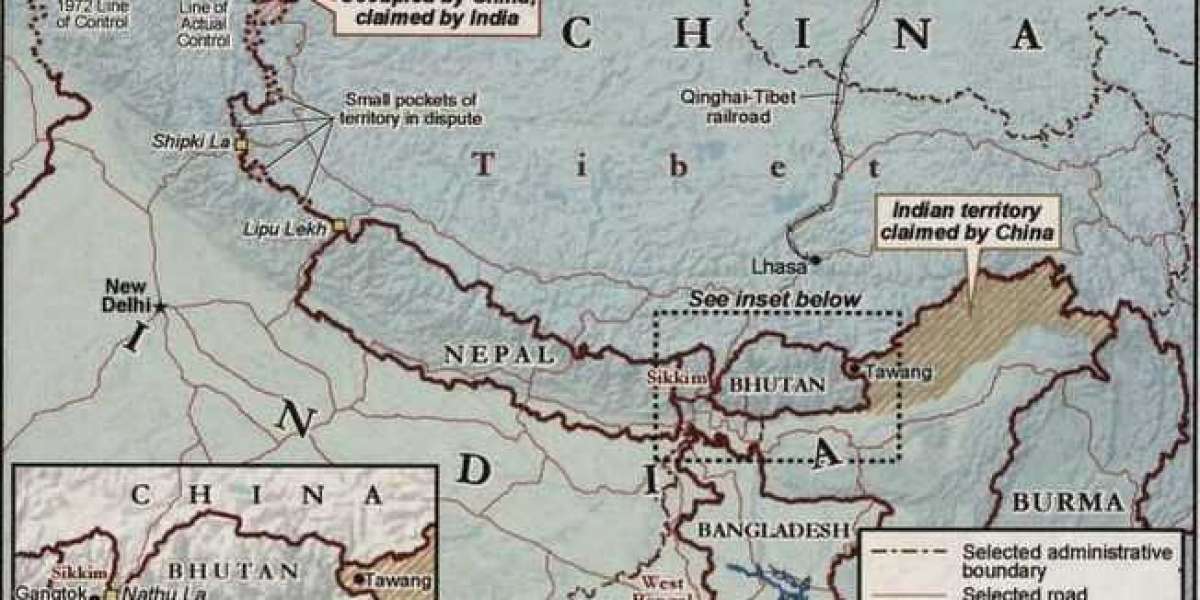

Tensions along the India and China border have been a defining aspect of bilateral relations for decades. However, the recent Kazan Agreement marks a potential turning point, offering a fresh approach to the India-China Ladakh border issue. This agreement, which facilitates disengagement at Depsang and Demchok, signals a shift towards de-escalation. While cautious optimism prevails, the broader geopolitical implications remain significant.
Buffer Zones and the Path to Disengagement
Since 2020, India and China have created multiple buffer zones along the India China Ladakh border to prevent direct military confrontations. These zones, stretching from Pangong Tso Lake to the Galwan Valley, restrict physical patrolling and grazing. However, Depsang and Demchok have been particularly contentious, as China had blocked Indian patrols in these areas for over a decade. The Kazan Agreement has now paved the way for staggered patrolling, allowing both sides controlled access to these disputed regions.
The Economic Underpinnings of the Agreement
Beyond military considerations, economic factors have played a crucial role in shaping this diplomatic breakthrough. Despite ongoing India and China border tensions, trade between both countries has remained strong, with India's trade deficit exceeding US$100 billion annually. At the same time, India has restricted Chinese investments and technology access, aligning itself more closely with the United States through strategic alliances like the QUAD. However, given China’s economic challenges—industrial overcapacity, a declining real estate sector, and high unemployment—there is a mutual incentive to stabilise relations. The Kazan Agreement can thus be seen as a pragmatic step towards reducing hostilities while preserving economic ties.
Chinese Perspectives and Future Challenges
Chinese analysts view the agreement as a significant breakthrough, raising hopes for improved relations. Some scholars believe this could lead to increased cooperation within global forums like the Shanghai Cooperation Organisation (SCO). However, concerns remain. China acknowledges that structural differences persist, and external influences—particularly India's growing ties with Western powers—could complicate long-term reconciliation. Indian analysts also remain cautious, emphasising that while disengagement has begun, trust-building between the two militaries will take time.
Conclusion
The Kazan Agreement marks a step towards reducing friction along the India and China border, particularly in the ‘India China Ladakh border’ region. While immediate hostilities may have eased, long-term stability will require sustained diplomatic and military dialogue. To explore more details on this development and its implications, visit the detailed article for a comprehensive analysis.