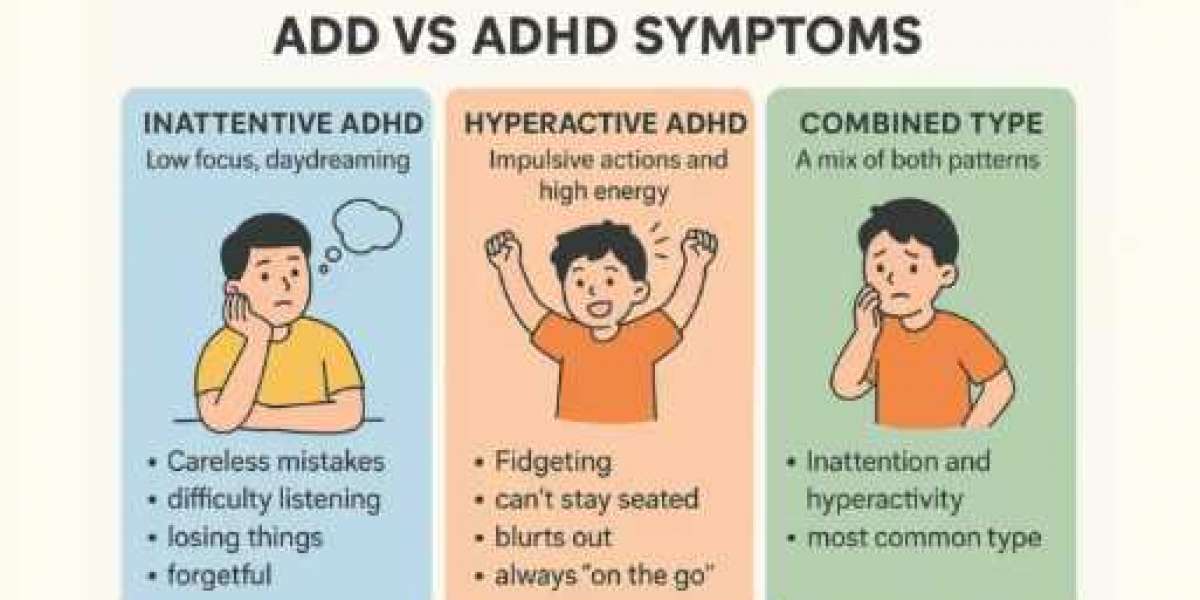

ADD and ADHD are terms you’ve likely heard interchangeably, but there are important differences. ADD, or Attention Deficit Disorder, was the older term, primarily describing attention difficulties without hyperactivity. ADHD, or Attention Deficit Hyperactivity Disorder, is now the medically recognized classification, encompassing a broader spectrum.
In this article, you’ll learn what has changed in the Difference between ADD and ADHD, how diagnosis has evolved, ADHD subtypes, and the benefits of having ADHD in your personal and professional life.
Understanding ADD
What ADD Meant
ADD referred to challenges with focus, organization, and memory, without hyperactive behaviors. If you had ADD, you might have been easily distracted or struggled to complete tasks.
Key Symptoms of ADD
- Difficulty sustaining attention
- Forgetfulness and misplacing items
- Daydreaming or appearing “zoned out”
- Struggling with routine or boring tasks
Historical Context
ADD was recognized in the 1980s to categorize individuals primarily facing attention difficulties. Clinicians later observed hyperactivity often accompanied inattention.
Transition to ADHD
Why the Terminology Changed
The shift to ADHD included hyperactivity and impulsivity, acknowledging the diversity of attention-related challenges. This reclassification improved diagnosis and treatment.
ADHD Subtypes
- Inattentive Type: Focus challenges without hyperactivity, formerly ADD
- Hyperactive-Impulsive Type: Restlessness, impulsivity, and high energy
- Combined Type: Both inattentive and hyperactive-impulsive traits
Advantages of Modern Diagnosis
- More accurate identification of symptoms
- Tailored treatment approaches, including therapy and medication
- Recognition of strengths, such as creativity and hyperfocus
Benefits of Having ADHD
Creativity and Problem-Solving
Your unique brain wiring helps you think outside the box, generating innovative solutions.
Hyperfocus
You can become deeply engrossed in tasks that interest you, achieving remarkable results.
Energy and Enthusiasm
High energy can be channeled into productive work and dynamic projects.
Resilience and Adaptability
Navigating ADHD challenges develops problem-solving skills and flexibility.
Entrepreneurial and Leadership Strengths
Many with ADHD thrive in entrepreneurial roles, risk-taking, and big-picture thinking.
Strategies to Leverage ADHD Strengths
Medication
Stimulants or non-stimulants help manage attention, impulsivity, and focus.
Behavioral and Cognitive Therapy
Therapies, including CBT, teach organization, time management, and coping strategies.
Lifestyle Adjustments
Structured routines, exercise, mindfulness, and sufficient sleep improve focus and energy.
Self-Acceptance and Strength-Based Approach
- Engage in work and hobbies that capture your interest
- Use digital tools or planners to organize tasks
- Recognize your strengths to boost confidence and productivity
Common Misconceptions
- ADD still exists → False: ADHD is the current, comprehensive term
- ADHD is a disadvantage → False: It includes creativity, energy, and problem-solving
- Hyperactivity is always present → False: Inattentive type may lack hyperactivity
FAQ Section
- Are ADD and ADHD the same?
No. ADD is outdated. ADHD now covers attention-related challenges including hyperactivity. - Can ADHD have benefits?
Yes. Creativity, hyperfocus, energy, and problem-solving are common advantages. - What are the ADHD subtypes?
Inattentive, hyperactive-impulsive, and combined types. - Is hyperactivity required for ADHD?
No. Inattentive type may not show hyperactive traits. - Can adults have ADHD?
Yes. ADHD continues into adulthood, affecting focus, work, and relationships. - Does ADHD enhance creativity?
Yes. Many with ADHD produce innovative and unconventional ideas. - Are there treatments for ADHD?
Yes. Medication, therapy, and lifestyle modifications improve attention and focus. - Is ADHD a mental illness?
No. It is a neurodevelopmental condition with both challenges and strengths. - Can routines help ADHD?
Yes. Structured routines and reminders improve daily productivity and focus. - Can ADHD traits contribute to success?
Yes. Hyperfocus, creativity, energy, and resilience often lead to personal and professional achievements.