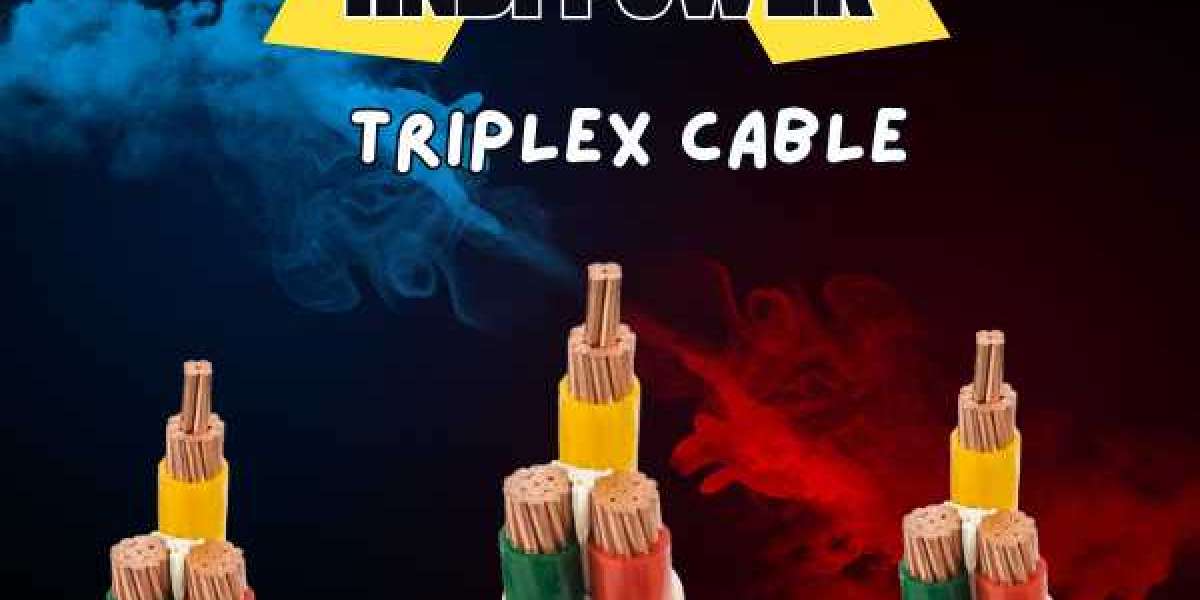

In today’s fast-growing power distribution networks, utilities and EPC contractors require conductors that are reliable, easy to install, and optimized for overhead service connections. One of the most widely used solutions for low-voltage overhead lines is triplex cable.
Designed mainly for service drop applications, triplex cable offers a safe and economical way to deliver electricity from distribution lines to residential, commercial, and light industrial consumers. For engineers and procurement teams working on grid expansion or rehabilitation projects, understanding the technical structure, performance advantages, and application limits of triplex cable is essential for selecting the right product.
As a global manufacturer of overhead conductors and power cables, HNBF Power supplies high-quality triplex service drop cable solutions engineered for demanding utility environments and international standards.
What Is Triplex Cable?
Triplex cable is an overhead bundled conductor commonly used in low-voltage distribution systems. It typically consists of:
Two insulated phase conductors
One bare or insulated neutral messenger conductor
The three conductors are twisted together to form a compact and mechanically stable cable assembly.
This configuration is specifically designed for overhead service drop lines, where power is delivered from a pole-mounted distribution network to the customer’s service entrance.
Typical Construction of Triplex Service Drop Cable
Phase Conductors
The phase conductors are usually made of:
Aluminum conductors (1350-H19 aluminum or equivalent)
Insulated with weather-resistant materials such as XLPE or HDPE
These insulation systems provide excellent resistance to ultraviolet radiation, moisture, and temperature variations.
Neutral Messenger Conductor
The neutral conductor often serves a dual purpose:
Electrical neutral path
Mechanical support for the cable span
In many designs, the neutral messenger is a bare aluminum conductor or an insulated aluminum conductor, sized to carry both current and mechanical loads.
Key Technical Advantages of Triplex Cable
1. Optimized for Overhead Service Drop Applications
Triplex cable is purpose-built for short- to medium-span service drops in overhead distribution networks. Its bundled structure improves stability and minimizes conductor separation under wind or ice loading.
2. Lightweight and Easy to Install
Compared with traditional single-conductor installations, triplex cable significantly reduces installation time. The pre-assembled structure simplifies stringing operations and helps utilities shorten project schedules.
3. Improved Safety in Low-Voltage Networks
The insulated phase conductors reduce the risk of accidental contact and short circuits, especially in dense residential areas where clearance distances may be limited.
4. Cost-Effective for Utility Projects
For utility operators and EPC contractors, triplex cable offers a practical balance between performance and cost. Reduced labor, simplified hardware requirements, and lower maintenance demands contribute to lower total lifecycle costs.
Common Applications of Triplex Cable
Triplex cable is widely used in:
Overhead service drop connections
Residential and commercial distribution networks
Temporary power supply lines for construction projects
Rural electrification and network expansion programs
Because of its mechanical strength and electrical reliability, it remains one of the most preferred conductors for last-mile power delivery.
Electrical and Mechanical Performance Considerations
Electrical Ratings
Triplex cable is designed to operate in low-voltage systems, commonly:
600 V class distribution
Standard utility frequency applications
The aluminum conductors provide reliable conductivity while maintaining a favorable strength-to-weight ratio.
Mechanical Strength
The neutral messenger conductor supports the mechanical load of the entire assembly. Proper sizing of the messenger is critical to ensure:
Adequate sag performance
Resistance to wind pressure and ice accumulation
Long-term structural reliability
Engineers must evaluate span length, loading conditions, and installation tension when specifying triplex cable for overhead projects.
Triplex Cable vs. ABC Cable – Understanding the Difference
Although triplex cable and aerial bundled cable (ABC) both use bundled conductor designs, they serve different network requirements.
Triplex cable is primarily intended for:
Low-voltage service drops
Short-distance connections from poles to consumers
ABC systems, on the other hand, are generally used for:
Main low-voltage distribution lines
Longer spans and higher mechanical demands
Selecting the correct solution depends on network layout, safety requirements, and utility design standards.
Manufacturing Quality and Standards at HNBF Power
HNBF Power manufactures triplex cable as part of its comprehensive overhead conductor and power cable portfolio, which includes AAC, AAAC, ACSR, ABC, LV power cable, and concentric cable.
Each triplex cable supplied by HNBF Power is produced with:
High-purity aluminum conductors
Consistent insulation thickness and concentricity
Strict dimensional and electrical testing procedures
The production process is aligned with commonly required utility specifications and relevant international standards, enabling utilities and EPC contractors to deploy the cables with confidence in diverse operating environments.
Why Procurement Teams Choose HNBF Power for Triplex Cable
For grid operators and project buyers, supplier reliability is just as important as product performance. HNBF Power supports utility and infrastructure projects worldwide by offering:
Stable and scalable manufacturing capacity
Technical documentation and compliance support
Custom conductor sizing and insulation options
Project-based supply coordination for transmission and distribution programs
This makes HNBF Power a dependable partner for both standard service drop projects and customized distribution network upgrades.
Frequently Asked Questions (FAQs)
1. What is triplex cable mainly used for?
Triplex cable is mainly used for overhead service drop connections that supply power from utility distribution lines to residential, commercial, or light industrial customers.
2. Is triplex cable suitable for main distribution feeders?
Triplex cable is generally not designed for main low-voltage feeders. For those applications, aerial bundled cable (ABC) systems are typically more suitable due to higher mechanical and network capacity requirements.
3. What insulation types are commonly used in triplex cable?
The most common insulation materials for triplex cable are XLPE and HDPE, selected for their weather resistance, electrical performance, and long service life in outdoor environments.
4. Can triplex cable be customized for different utility standards?
Yes. Triplex cable can be manufactured with different conductor sizes, insulation thicknesses, and messenger configurations to match specific utility and project specifications.
Conclusion
Triplex cable continues to play a vital role in modern overhead distribution networks by providing a reliable, safe, and cost-efficient solution for low-voltage service drop applications. Its compact construction, mechanical stability, and proven field performance make it an ideal choice for utilities and EPC contractors seeking dependable last-mile power delivery solutions.
If you are planning a new distribution project or upgrading your existing network, contact HNBF Power today to discuss your triplex cable requirements and receive customized overhead conductor solutions tailored to your utility and project needs.








