

Surgical success depends on many factors—skill, preparation, and the right tools. Among the most frequently used instruments in any operating room, thumb forceps hold a quiet but critical place. Small enough to fit between two fingers, yet precise enough to determine surgical outcomes, these instruments deserve more attention than they typically get.
This guide covers everything you need to know about thumb forceps: what they are, how they work, the different types available, and why choosing the right pair matters.
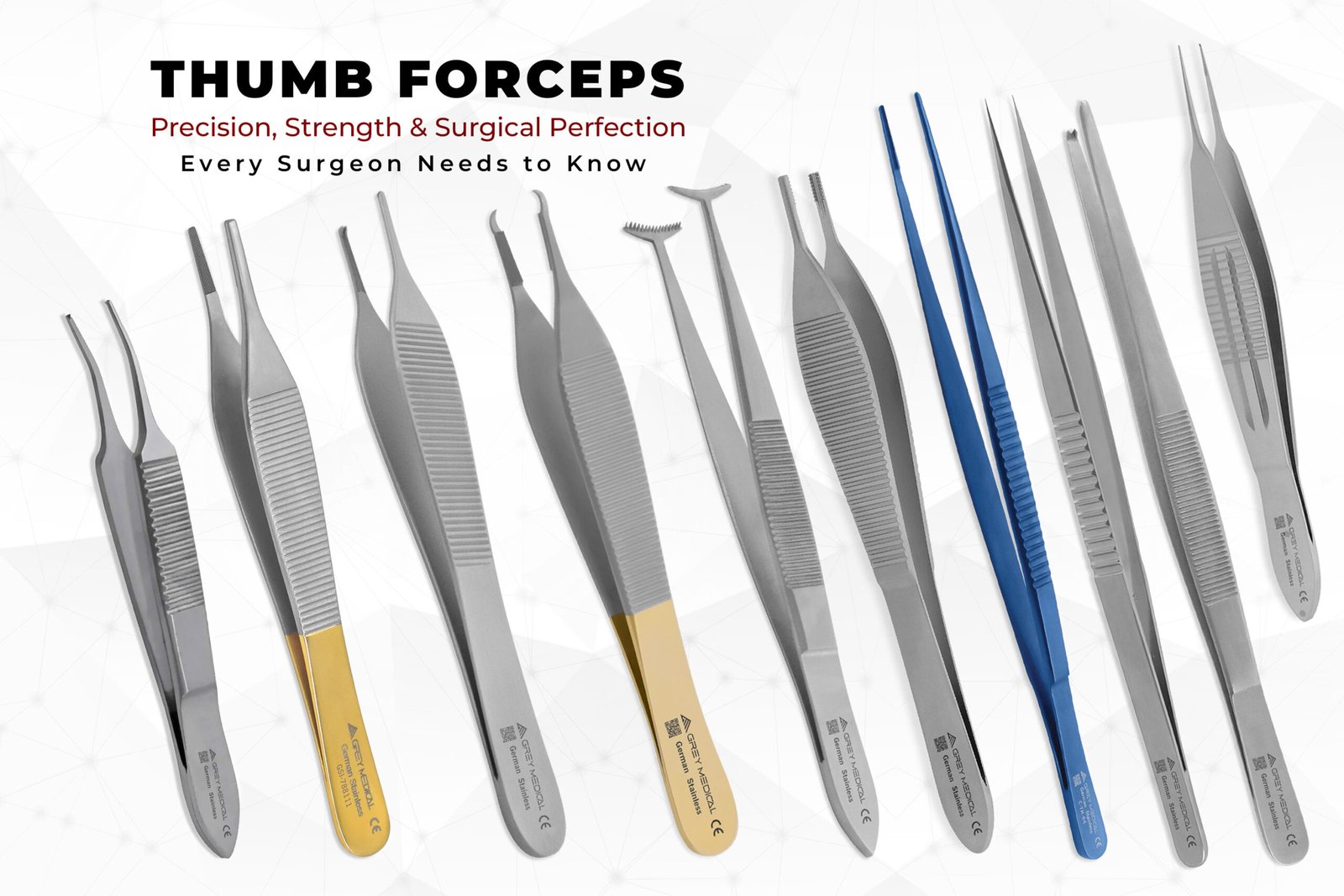
What Are Thumb Forceps?
Thumb forceps are handheld, tweezer-like surgical instruments used to grasp, hold, and manipulate tissue during medical procedures. Unlike locking forceps (which use a ratchet mechanism to stay closed), thumb forceps rely on the natural spring tension of their design. The surgeon applies pressure with their thumb and forefinger to close the tips, then releases to let go.
Their simplicity is their strength. With no moving parts to jam or mechanisms to fail, thumb forceps offer surgeons direct tactile feedback—a feature that becomes invaluable during delicate procedures.
Common Types and Their Uses
Not all thumb forceps are built the same. Different tip designs serve very different surgical purposes.
Tissue Forceps
Tissue forceps feature small teeth at the tip, allowing surgeons to grip tissue firmly without it slipping. These are ideal for procedures that require a secure hold, such as suturing skin or manipulating dense connective tissue.
Dressing Forceps
Dressing forceps have smooth, flat tips. They're commonly used for handling sterile dressings, packing wounds, or working in areas where serrated tips might cause unnecessary trauma to soft tissue.
Adson Forceps
One of the most recognizable styles in surgery, Adson forceps have a delicate, tapered design with either smooth or serrated tips. Plastic surgeons and dermatologists frequently reach for these when precision and minimal tissue damage are the top priorities.
Micro Forceps
As the name suggests, micro forceps are designed for the smallest and most intricate procedures—ophthalmologic surgery, neurosurgery, and microsurgery, where the margin for error is measured in fractions of a millimeter.
What to Look for in a Quality Instrument
Choosing the right thumb forceps goes beyond picking the correct tip style. Material quality, craftsmanship, and ergonomics all play a role in performance and longevity.
Material: High-grade stainless steel is the standard for good reason. It resists corrosion, withstands repeated sterilization, and maintains its structural integrity over thousands of uses. Titanium is another option—lighter and non-magnetic, making it suitable for MRI-adjacent environments.
Tip Precision: The tips of a quality pair of forceps should align perfectly when closed. Even minor misalignment can result in poor grip and tissue slippage, which is the last thing a surgeon needs mid-procedure.
Spring Tension: Too stiff, and the surgeon fatigues quickly. Too loose, and control suffers. The ideal balance keeps the instrument comfortable during extended use without sacrificing grip strength.
Finish: A matte or satin finish reduces glare under surgical lighting, improving visibility and reducing eye strain during long procedures.
Why Instrument Quality Matters in Surgery
There's a common misconception that basic surgical tools are largely interchangeable. In reality, a poorly crafted instrument can introduce risk at the worst possible moment. Forceps that slip, bend under pressure, or fail to close properly don't just cause frustration—they can compromise patient safety.
This is why procurement teams and surgeons increasingly turn to trusted manufacturers rather than sourcing on price alone. GreyMedical®, a privately owned medical technology company dedicated to innovation and excellence in the craft of surgical instruments, is one example of a manufacturer that prioritizes both performance and precision. The instruments they produce are built to meet the rigorous demands of modern surgical environments.
Sterilization and Maintenance
Thumb forceps used in sterile fields must be properly sterilized between procedures. Autoclaving (steam sterilization) is the most widely used method and is compatible with most stainless steel instruments. Surgeons and OR staff should also inspect forceps before each use for signs of wear, warping, or tip misalignment.
Proper storage—keeping forceps in a dedicated tray or pouch—helps preserve tip alignment and prevents damage from contact with other instruments.
Choosing the Right Forceps for the Job
Matching the instrument to the procedure is a skill developed over time, but some general principles apply. For skin procedures, tissue forceps with fine teeth offer the grip needed for suturing. For ophthalmic or neuro work, micro or jeweler-style forceps deliver the control required. For wound care and dressing changes, smooth dressing forceps minimize trauma.
When in doubt, consulting with an instrument specialist or reviewing clinical guidelines for your specialty can point you toward the right choice.
Precision Starts With the Right Tool
Every surgical instrument tells a story of countless decisions—about materials, tolerances, and design. Thumb forceps might look simple, but they represent a commitment to precision that runs through every successful procedure.
For surgical teams looking to upgrade their instrument sets or source reliable tools for new facilities, working with reputable manufacturers ensures consistency and quality where it matters most. The right forceps won't make a surgeon—but the wrong ones can make their job significantly harder.








