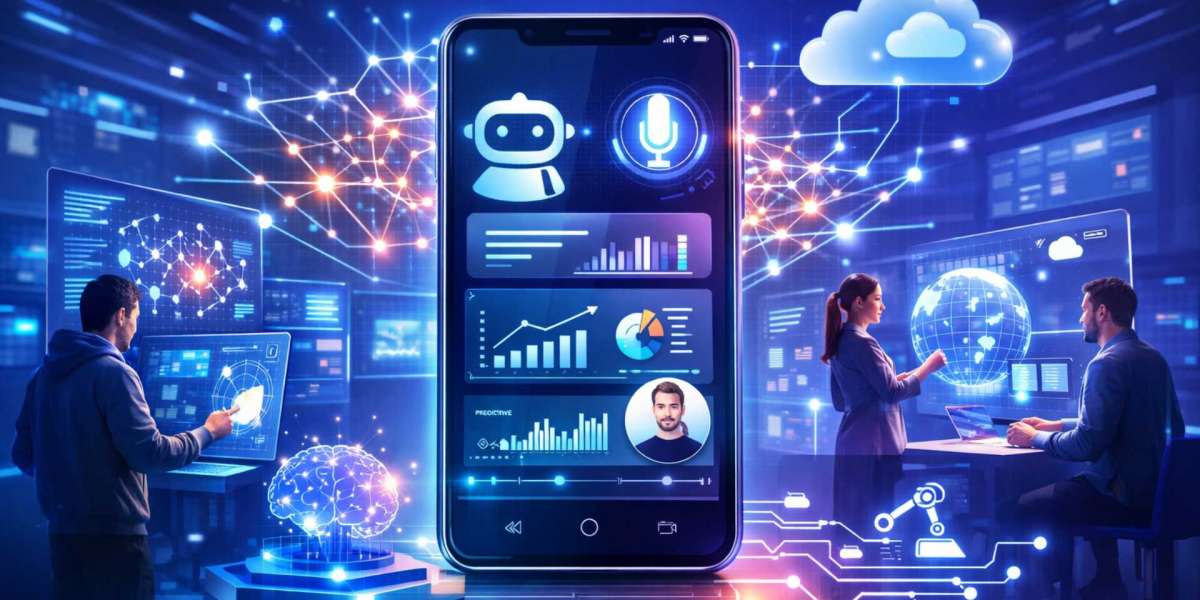

In today’s fast-evolving digital ecosystem, mobile applications are no longer just tools, they are intelligent platforms designed to anticipate user needs, automate processes, and deliver personalized experiences. As businesses strive to stay competitive, the integration of artificial intelligence has become a defining factor in app innovation. This is where AI development services play a transformative role.
From predictive recommendations to real-time decision-making, AI in Mobile App Development is revolutionizing how apps function, interact, and deliver value. Let’s explore how AI is shaping the next generation of mobile applications and why it has become indispensable for modern businesses.
Understanding AI in Mobile App Development
Artificial Intelligence in mobile apps refers to the integration of advanced algorithms and data-driven models that enable apps to learn from user behavior and make intelligent decisions. Key technologies driving this transformation include:
- Machine Learning (ML): Enables apps to analyze patterns and improve over time
- Natural Language Processing (NLP): Powers chatbots and voice assistants
- Computer Vision: Allows apps to interpret images and videos
With these capabilities, mobile apps can now go beyond static functionality and deliver dynamic, context-aware experiences. Businesses leveraging AI development services can create applications that adapt to user preferences, making interactions more intuitive and engaging.
Key Features Enabled by AI Development Services
1. Personalized User Experience
AI enables mobile apps to analyze user behavior, preferences, and interactions to deliver tailored content. Whether it's product recommendations in eCommerce or curated playlists in entertainment apps, personalization significantly boosts user satisfaction and retention.
2. Voice and Chatbot Integration
AI-powered chatbots and voice assistants provide instant, human-like interactions. These features improve customer support, reduce response times, and enhance user convenience.
3. Predictive Analytics
Predictive capabilities allow apps to forecast user behavior and trends. For example, fitness apps can suggest workout plans, while financial apps can provide spending insights and alerts.
4. Image and Speech Recognition
AI-driven recognition technologies enable features like facial authentication, voice commands, and object detection. These capabilities are widely used in security, healthcare, and social media applications.
Benefits of AI Development Services for Mobile Apps
Enhanced User Engagement
AI-powered personalization ensures that users receive relevant content, increasing engagement and session duration. Apps become more interactive and user-centric.
Improved App Performance
Automation powered by AI reduces manual intervention, speeds up processes, and enhances overall app efficiency. This leads to faster load times and smoother user experiences.
Advanced Security
AI plays a crucial role in detecting unusual patterns and preventing fraud. Features like biometric authentication and anomaly detection help safeguard user data.
Cost Efficiency
Although initial implementation may require investment, AI significantly reduces long-term operational costs by automating repetitive tasks and improving resource utilization.
Industry Use Cases of AI in Mobile Apps
E-commerce
AI enhances product discovery through recommendation engines, personalized offers, and visual search features.
Healthcare
Mobile apps leverage AI for symptom analysis, virtual consultations, and health monitoring, improving patient outcomes.
Finance
AI-driven apps provide fraud detection, automated financial advice, and real-time transaction monitoring.
Logistics
AI optimizes route planning, demand forecasting, and delivery tracking, improving efficiency in supply chain operations.
Challenges in Implementing AI in Mobile Apps
Despite its advantages, integrating AI into mobile apps comes with certain challenges:
- High Development Costs: Building AI models requires significant investment
- Data Privacy Concerns: Handling sensitive user data demands strict compliance
- Integration Complexity: Merging AI with existing systems can be technically challenging
- Skill Gap: Requires experienced developers and data scientists
Future Trends in AI-Powered Mobile Apps
The future of mobile apps is deeply intertwined with AI advancements. Key trends to watch include:
- AI + IoT Integration: Smarter connected devices and real-time data exchange
- Edge AI: Faster processing with reduced latency by handling data locally
- Hyper-Personalization: Highly tailored user experiences based on real-time insights
- AI-Driven Automation: Fully automated workflows and decision-making processes
How to Choose the Right AI Development Services Provider
Selecting the right partner is critical for successful AI implementation. Businesses should consider:
- Proven experience in AI and mobile app development
- Expertise in relevant technologies like ML and NLP
- Ability to deliver scalable and customized solutions
- Strong post-development support and maintenance
Companies seeking reliable and innovative solutions can explore providers like SSTech System, known for delivering scalable AI-driven mobile applications tailored to business needs.
Conclusion
The integration of AI is no longer optional, it is a necessity for businesses aiming to build next-generation mobile applications. AI development services empower apps with intelligence, automation, and personalization, enabling them to deliver exceptional user experiences and drive business growth.
As AI in Mobile App Development continues to evolve, organizations that embrace this technology early will gain a significant competitive advantage. The future belongs to smart, adaptive, and user-centric mobile applications and AI is at the heart of this transformation.








